



In the early 1980’s the world was learning of the horrors of a new disease that seemed to target gay men exclusively. Then on the July long-weekend of 1984 Edmonton saw it first case of HIV/AIDS diagnosed and Ross Armstrong became face of a new era for the gay community.
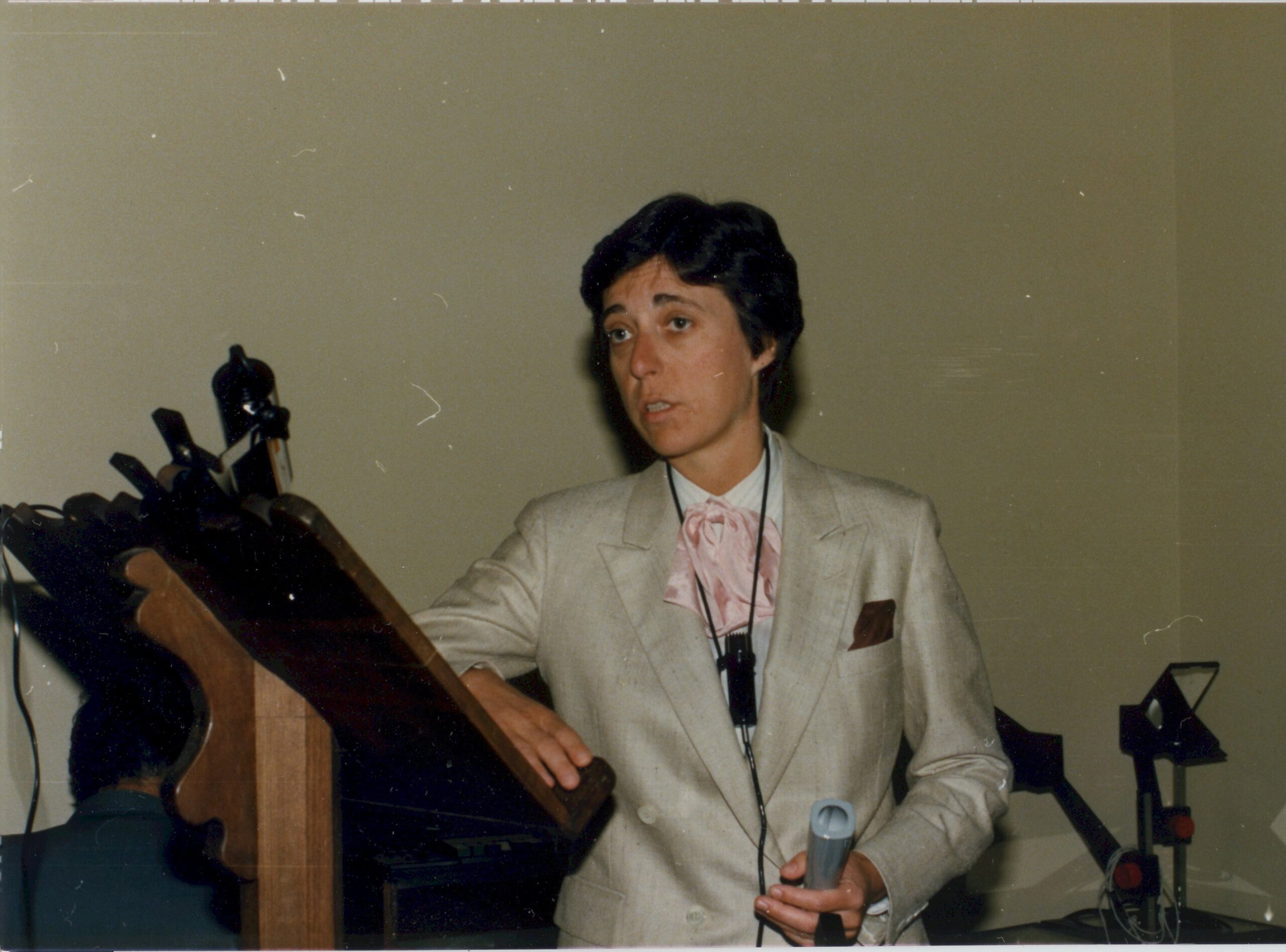
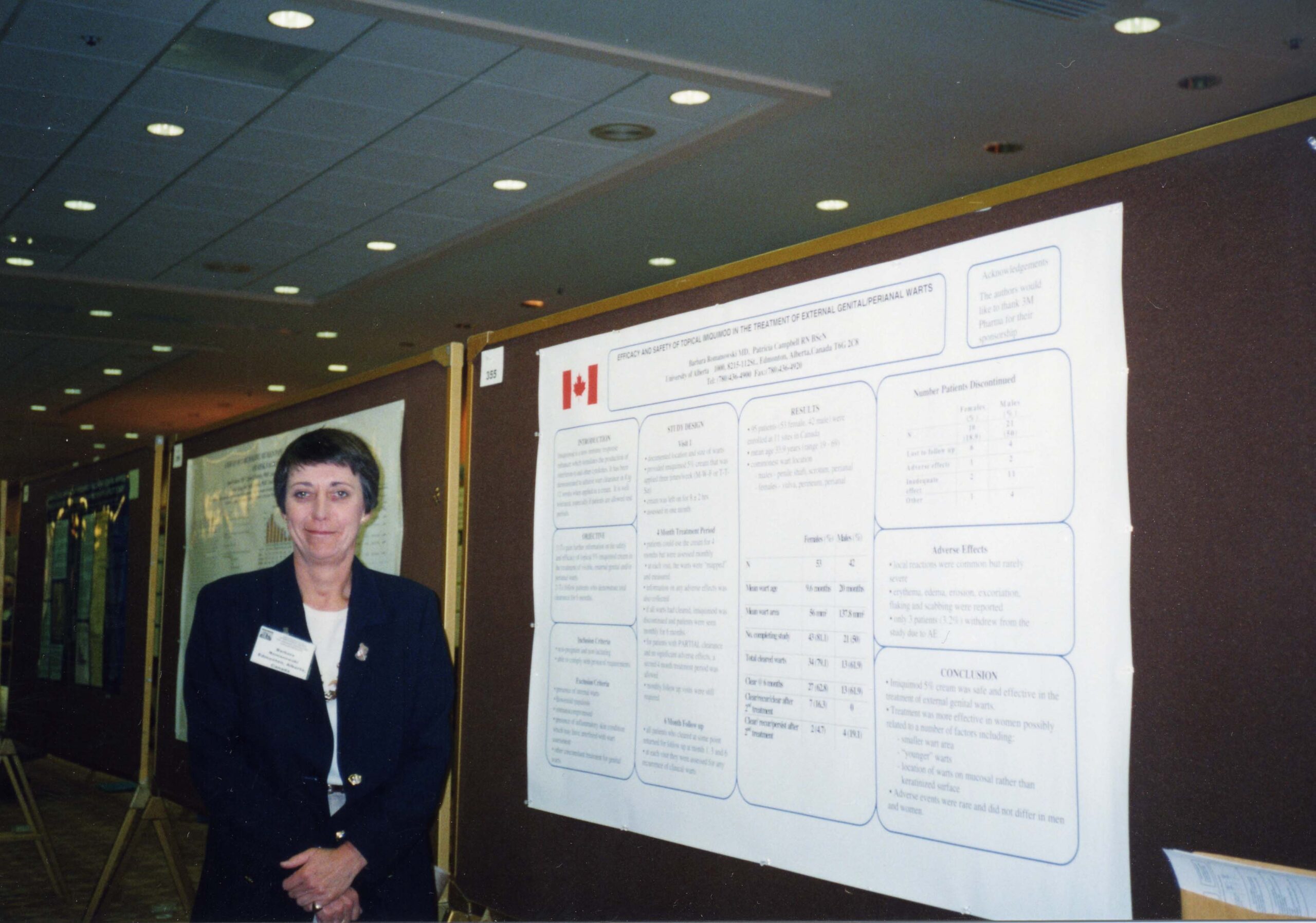
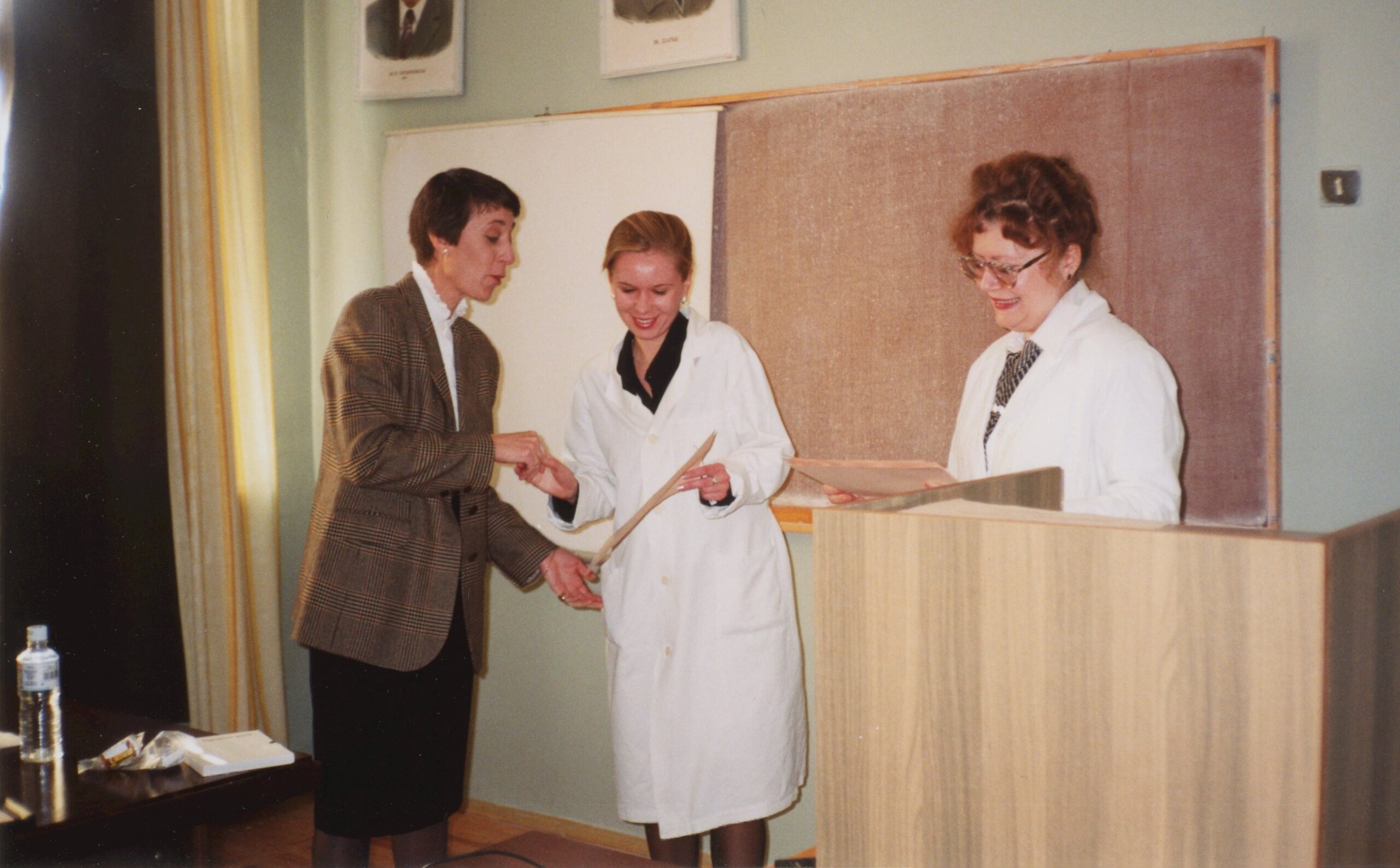
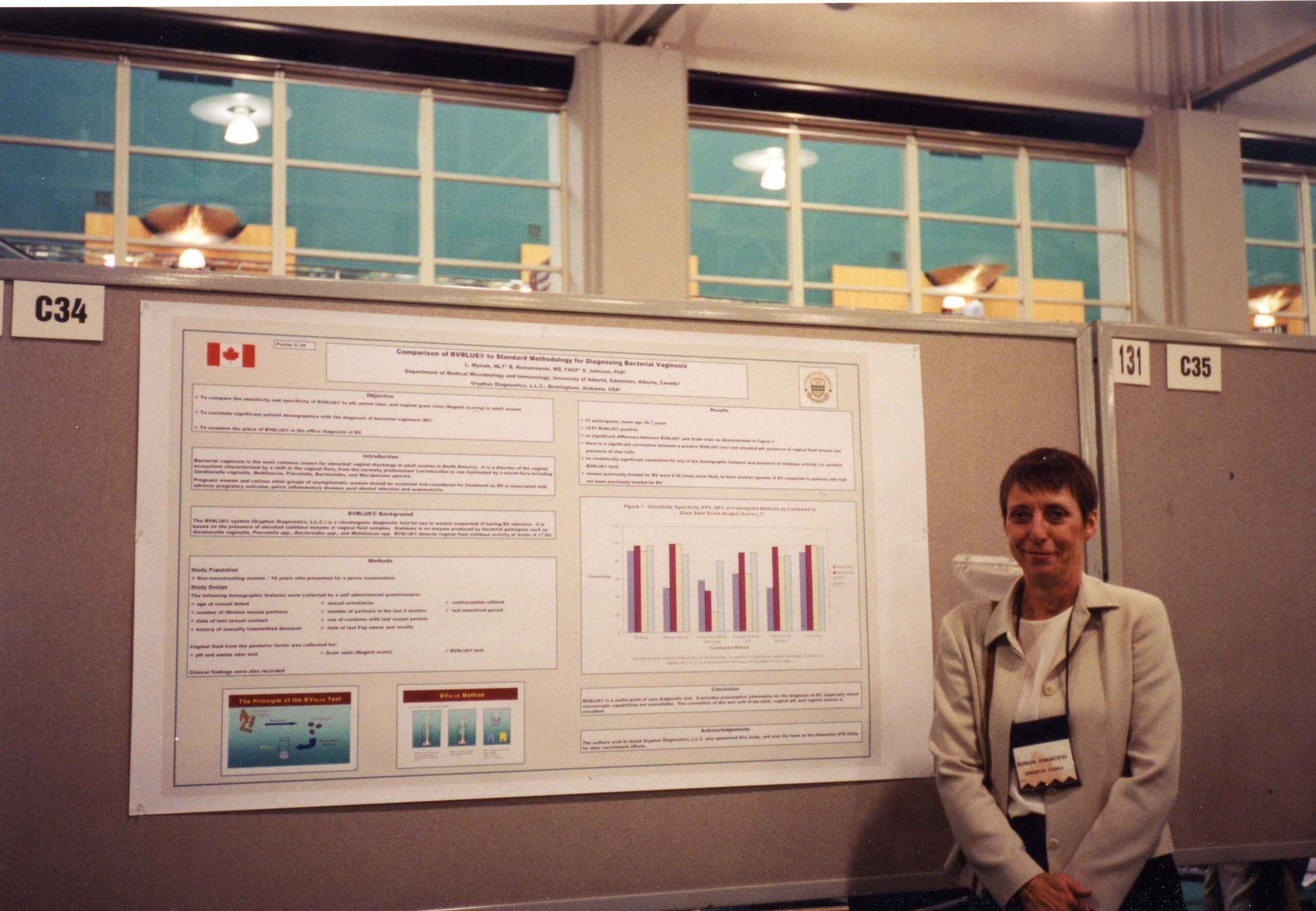
Dr. Barbara Romanowski was just 11 years into her career as an Infectious Disease Doctor and one year into her new role as Director of STD Control for the Province of Alberta based in Edmonton. After spending a year in London learning of this new disease – called GRID at the time (Gay Related Immune Disease) – she had returned to Edmonton taking on her now position and became the leading expert on diagnosis and treatment of what was then called AIDS (Acquired ImmunoDeficiency Syndrome)
In this video interview conducted by David Stafford we hear how the disease impacted Edmonton, the challenges faced with the medical system and politicians. She shares how the general community reacted including medical staff and the toll that the many deaths took on Dr. Romanowski.
These days Dr. Barbara Romanowski lives in retirement in Vancouver and on Vancouver Island but she still continues to do some work with HIV/AIDS folks at the Dr. Peter Centre which provides care for people with HIV through supportive housing, day health program, and nursing care residence.



For additional reading:
Have You Met … Barbara? – The Quad, University of Alberta
U of A Alumni Awards- ‘I think back with horror’ by Susan Pratt
Edmonton’s Forgotten Epidemic – The Gateway Online
Barbara Romanowski’s research while affiliated with University of Alberta and other places
Funding for this story made possible by the Edmonton Heritage Council and the City of Edmonton


Transcript – A conversation with Dr. Barbara Romanowski
Interview with Dr. Barbara Romanowski
Interviewer: David Stafford Subject: Dr. Barbara Romanowski, former Director, Sexually Transmitted Disease Program / AIDS Program, Province of Alberta Topic: Forty years of HIV/AIDS in Edmonton and Alberta, 1984–2024 Source: Video interview (YouTube auto-generated captions, cleaned and edited for readability)
[Recording opens with music]
DAVID STAFFORD (narration): Forty years ago, in 1984, the first person to be diagnosed with AIDS in Edmonton, Alberta was Ross Armstrong. Ross was a competitive swimmer. He also competed in the very first Gay Olympics in San Francisco in 1982, where he won a silver medal in his category. This young man unfortunately passed away in early 1986 from complications of AIDS. This was the beginning of the rise of the HIV epidemic in the early 1980s.
Hello. My name is David Stafford, and I’m pleased to have with me today Dr. Barbara Romanowski, who was the director of the AIDS program in Alberta. Welcome, Dr. Romanowski.
DR. BARBARA ROMANOWSKI: Hello, David. Thank you very much for the invitation to participate in this video.
STAFFORD: Great to see you. I hope all is going well. It’s been a number of years since we’ve seen each other.
ROMANOWSKI: It has been a number of years. I am enjoying retirement, but I miss seeing people such as you on a regular basis — my other friends and my colleagues. But life goes on.
STAFFORD: It’s hard to believe forty years have gone by since all this started, back in Alberta and throughout the world.
ROMANOWSKI: It is absolutely amazing. For me personally — when I started my career in infectious disease, HIV had not yet been recognized. That happened, and sadly it happened, three years after I assumed my position as director of the sexually transmitted disease program. But in the forty years since, we have seen such a progression in HIV. As you described, Ross succumbed to this infection very early in its course. Now we have medications that allow people to have essentially a normal lifestyle and a normal life expectancy, which is amazing.
STAFFORD: I’d like to go back and talk about a few different things. Towards the beginning, before Edmonton, you took a sabbatical — I believe it was one year — to London, to learn more about AIDS. Why London, when the States was closer? Was there better instruction there on what was going on?
ROMANOWSKI: Actually, the sabbatical was not HIV-related. It was a sabbatical to the UK, to London, to do some research on other sexually transmitted diseases. The reason it was the UK is that I happened to have been born there — I lived there until I started school — and I had a lot of colleagues in the UK, and there was an opportunity to do a sabbatical in London.
While I was on sabbatical, the reports started coming out of Los Angeles of this strange lung infection that was occurring in young gay men. And from then on, we all know what the history was. So I first became aware of HIV while I was on sabbatical. Shortly after I returned to Edmonton, I saw my first HIV patient.
STAFFORD: Thank you. I wasn’t aware of that. Let’s talk a bit about the first days, when more and more patients were starting to get HIV. Once they got it, it was considered a death sentence — that’s what they thought — and they were more or less referred to you. But even at that time there was very little medication, and the medications really didn’t cure the disease; they more or less helped with the effects of what was happening. So when they came for their first visits, totally confused — how did you handle all this?
ROMANOWSKI: It was very difficult, for both the patient and for health care providers, including myself. The first drug we had available was zidovudine, or AZT.¹ I remember that with the prescription, patients were given an alarm clock, because the information we had at that time said the drug had to be taken every four hours. And you’re absolutely right — it did not cure the infection, but in retrospect it did, to a small degree, maintain their immune system for some period of time.
STAFFORD: In the early days they were walking in and they had no place to turn, and there were very limited answers they could get from anywhere. You were basically the frontline person in all this. That must have been very hard on you.
ROMANOWSKI: It was very difficult. Not only did we not have answers from a medical perspective, but there were all the other issues — no support in the community, a lot of families disowned their children because of this awful disease, and there was all this misinformation: that it was airborne, that “I can’t touch you, I can’t be close to you.” It was unbelievable.
STAFFORD: You mention the misinformation. That reminds me of an article I read about a doctor out of the university — I won’t mention his name, I’ll just say Dr. G. He was doing a forum for teenagers and parents, about two hundred altogether, and he said the disease was transmitted through the green monkey. When I read this — and you did respond to it at the time — he was saying it was spread through bestiality, which was crazy.
ROMANOWSKI: That was a very common — sadly, a very common — myth at that time: that the first patient had engaged in bestiality in Africa, and somehow it got back to North America. We knew at that time that that wasn’t true. We have a lot more information now about patient zero.
But the misinformation went sadly much further than an unnamed physician who potentiated this myth. If individuals with HIV were admitted to hospital, there were signs on the doors of their hospital rooms saying “Do not enter — contagion.” People wouldn’t deliver their food; it was left on the floor with the door closed. They were awful, awful, awful times, and they were difficult for all of us who were trying to educate and trying to provide care for people.
STAFFORD: That was another thing you brought up. It was very understandable that health care workers were afraid — they didn’t know much about the disease. But how did that turn around? What kind of education were health care providers given over the years, as drugs came along and there was more understanding of the disease itself? Back at that time these poor people weren’t getting the treatment and care they were supposed to get.
ROMANOWSKI: The short answer, David, is through education — through repeating the same message over and over and over again. You educate some health care workers, who then educate their families, and the correct information gradually spreads. But this didn’t happen in months. It took years and years and years.
STAFFORD: So you found that education was something you had to really get involved in, over the years.
ROMANOWSKI: Exactly. Not only education of patients and education of their families, but public education. I did not receive any training in medical school on how to do TV interviews, but I did hundreds and hundreds and hundreds of talk shows and media interviews to try to get the correct message out — how this is transmitted, what the consequences are, how one is diagnosed, what is available for treatment.
STAFFORD: But the media seemed at times to take something you said and turn it around, so you had that to deal with too.
ROMANOWSKI: That’s probably the media’s job. They did it, and they’re still doing it.
STAFFORD: Yes, big time. For a while there you also got involved with the AIDS Network. What was your involvement with them?
ROMANOWSKI: The AIDS Network is an invaluable community resource. I remember sitting around Michael Phair’s kitchen table in 1982 — no, sorry, 1984 — planning the development of this community resource. They provided education, they provided support for the patient, they provided support for families. They had to change as the epidemic changed, as the risk groups changed. But they are a marvellous community support, and I think especially in the early days of HIV a lot of individuals would have had a hard time surviving without the support of the AIDS Network.
STAFFORD: I did read a bit about Michael Phair. There were five of them who got it going, as I understand it, and they were having problems with the province trying to get support for materials and things like that, so they took it on themselves — which deserves a good pat on the back.
ROMANOWSKI: Absolutely. And the government support was slow to come. Support from the government depended on who was in power. One of the health ministers, Jim Dinning,² received the first — I think it was called the Community Awareness Award — from the AIDS Network. But in all the time that I worked for government and ran the sexually transmitted disease program, government support was variable.
STAFFORD: Since you mention Jim Dinning’s name, I have a question that was given to me by Michael Phair. He asked me to ask: what was happening behind closed doors in the discussions developing the five-year plan by the Minister of the Department of Community and Occupational Health, Jim Dinning, that was announced in 1987?
ROMANOWSKI: That’s a very difficult question to answer. There were discussions among the politicians and the bureaucrats in the department, who sometimes asked for input from those of us who worked at ground level. Very frequently they did not ask for our input.
They developed this five-year plan and developed an AIDS program. The AIDS program was run separately from the sexually transmitted disease program, which at the time didn’t make much sense to me, and still doesn’t make much sense. It is sexually transmitted — why is it not part of the same program? Having said that, the AIDS program was run independently of the sexually transmitted disease program and accomplished many things. They were terrific in providing education — education in schools, education of health care workers. I don’t know if they were that successful in providing community support.
STAFFORD: That makes me think of another question, going back to the treatment of patients in hospital. There were certain protocols to be followed for different types of diseases — this is how we treat them, and so on. I think you mentioned in one of your interviews that at that time HIV was similar to hepatitis B, and that those protocols should have been the same — that patients should not have been put into private rooms and so on. But all those protocols were changed for someone with HIV. Who made those decisions? Any idea or insight?
ROMANOWSKI: I’m going to blame the administrators — but the blame is not entirely theirs. There was input from some medical personnel. I have no idea who. I was never part of that discussion; I wasn’t invited to be part of that discussion. Infection control individuals in the hospital develop these protocols and are responsible for them. But I think they were very slow in updating protocols to reflect the new disease information.
STAFFORD: That’s understandable, knowing how things go within government — I worked for government for thirty-five years, so I know things don’t happen overnight. Jumping back a bit: all the people diagnosed with HIV went through so much. They were losing their jobs, they couldn’t be insured. I don’t know how many of them took their own lives, but I’m sure a number of them did, because they couldn’t handle things.
ROMANOWSKI: Exactly. It was extremely difficult for patients. As you say, if they disclosed at their workplace they were at risk of losing their job, because individuals in the workplace were not educated — people didn’t want to work beside or with someone who was HIV positive. Some churches were supportive of individuals, some were not, so you took a risk if you disclosed your diagnosis to your clergy. And as I said before, many were disowned by family. It was a very depressing time.
STAFFORD: Also, at the beginning you went to a lot of their funerals, as I understand it.
ROMANOWSKI: I did, and I continued that for the first six to eight years of providing care. I then realized that I just couldn’t continue going to funerals. It took a huge emotional toll on me personally, and I wanted to continue working in the field, so I sadly had to make the decision to stop attending funerals. And as the epidemic progressed, gratefully there were fewer funerals to attend. It was personally very difficult for me.
STAFFORD: When you went over to College Plaza and had your own practice, were you doing research out of the office there?
ROMANOWSKI: I was doing research, and there was some HIV research, but most of it was on other sexually transmitted infections.
STAFFORD: Can you reflect on what was probably one of your biggest challenges over the years — in the early years, in the middle years?
ROMANOWSKI: In the middle years, the answer is easy: working for government. Which is why I left and went into private practice. I maintained my university association, but said goodbye to the government — and if I had not said goodbye to them, they probably would have said goodbye to me, because I was rocking the boat. Which you can do for a certain period of time, but not for a long period of time. That probably was my biggest frustration.
STAFFORD: Do you still feel there’s a stigma around HIV and AIDS?
ROMANOWSKI: I do. It’s much less than it was, and the stigma now is a bit different, as the risk groups have changed, as the gay community has done a superb job of self-educating, and as there’s much more public education. But the new big risk group is injection drug users, who face a lot of prejudice with or without HIV. There are a lot more challenges in providing care for that group than there was, or is, in providing care for individuals who are much more stable.
STAFFORD: I have a question from Catherine Broomfield,³ the executive director of HIV Edmonton: what is your perspective on how the field of sexually transmitted and blood-borne infections has developed since 1984?
ROMANOWSKI: Oh my. It has changed completely. Our understanding of all the infections that fit in that group has expanded exponentially. We are better at diagnosing, we are better at managing. There is no comparison — 1982 was the medieval ages in comparison to where we are now. We still have a long way to go; we don’t have cures for a lot of the infections. But it is day and night.
STAFFORD: I also have a question from an unknown person — and I’m not asking this for a friend: were there any patients or AIDS victims in the past who stand out in your memory today?
ROMANOWSKI: There are. There are individuals who stand out because I developed a close relationship with them — I don’t mean personally, I mean professionally. It was always a joy to see them. They asked terrific questions, and they by and large followed all of the instructions they were given. But I also remember other patients who were very challenging. I remember them, but I don’t remember them fondly. I remember many more individuals on the positive side. I still remember faces. I did have many memories.
STAFFORD: I’m running out of questions. Is there anything I haven’t covered that you would like to talk about? There’s so much you’ve done over the years, and I’ve read so many articles that I’m still in a spin.
ROMANOWSKI: When I remember back to HIV, I remember the struggles we had in the early years. It wasn’t until the early 1990s that the protease inhibitors — this new group of drugs — became available. Those first six to eight years were full of challenges. Medical challenges: there didn’t appear to be a lot of progress in our ability to manage the disease. The number of patients who succumbed to the infection. And the number of individuals who, towards the end of the course of their infection, said, “I’ve had enough. I can’t do this anymore. Will you support me and allow me to die with dignity at home?” That was tough. It wasn’t part of medical training when I graduated from medical school, but I’m very happy to say that I was able to help many individuals do that — not actively, but passively.
And then in the 1990s there were new challenges. We had better medicine, but with better medicine come more side effects, so one had to manage that. And then in the later years of HIV we again saw — not misinformation, but complacency among risk groups. There are now these good drugs available, so: if I am positive, someone’s going to take care of me, so I don’t need to use condoms, I can have twenty partners in a week, and I really don’t care. That was the later challenge.
STAFFORD: Thank you. And just a closing question: what are you doing these days to keep yourself busy?
ROMANOWSKI: I have moved to Vancouver, as you know. I got sick of Edmonton winters. I don’t care if it rains for four months here. If there’s snow for two days I stay home and laugh at Vancouverites, who can’t drive at the best of times, but they certainly can’t drive in the snow.
I enjoy reading, I enjoy music, I go to a lot of concerts. I have some property on one of the Gulf Islands that I’ve had for thirty years, and I spend a lot of time there. And I’m close to family — all my existing family lives on the West Coast. So there’s never a dull moment. It’s a beautiful city to walk in. I’m enjoying life.
STAFFORD: Great. I thank you very much for all the work you’ve done over the years. Many people think very highly of you. And really, thanks again for taking the time to have this conversation with me. Take care.
ROMANOWSKI: Thank you, David. It’s been a pleasure to see you and to participate in this project.
[Recording ends with music]
Editorial notes
This transcript was produced from YouTube’s automatic captions, which carry no punctuation, capitalization, or speaker attribution. The following was done:
- Speaker labels added throughout, and the opening narration separated from the start of the interview proper.
- Punctuation, capitalization, and paragraphing added.
- Filler words, false starts, and repeated words removed where they did not carry meaning. Deliberate repetition kept (for example, “awful, awful, awful times” and “over and over and over again”).
- Canadian spellings used (marvellous).
- Proper names corrected where the identification is confident — see numbered notes below.
- Nothing was added to the substance of either speaker’s answers.
Points worth flagging for the archive
- The 1984 kitchen-table meeting at Michael Phair’s home is described here as the founding planning session for the AIDS Network — a first-hand account from someone in the room, and a useful corroboration for the founding date.
- Dr. Romanowski’s self-correction (“in 1982 — no, sorry, 1984”) is preserved deliberately, since it is evidence of her dating the meeting.
- Ross Armstrong’s 1982 silver medal at the first Gay Games and his death in early 1986 come from Stafford’s narration, not from Dr. Romanowski, and should be sourced separately if cited.


David Stafford
No Bio provided

 Ron Byers
 Rainbow Story Hub