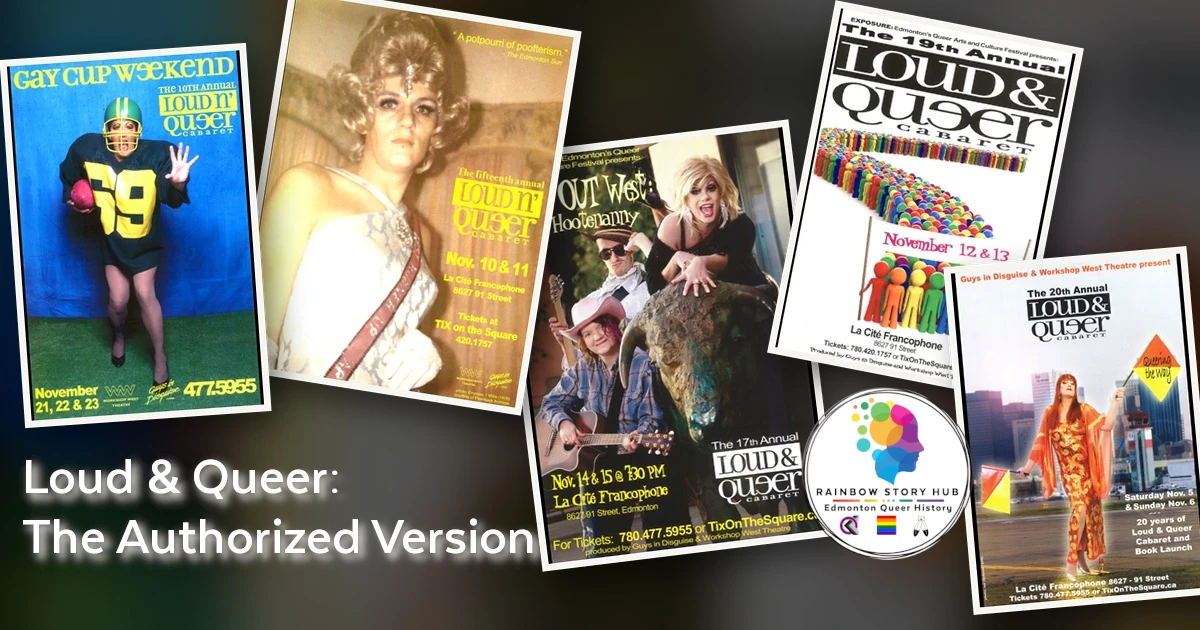
The year was 1991 and Darrin Hagen (in those days, just as widely known as Gloria Hole) was vexed.
He had stood up to the new owner of the Edmonton gay bar Flashback and had consequently lost his bartending job. Alberta’s homophobia was getting so much airtime. The Delwin Vriend seven-year saga for sexual orientation as a protected human right had kicked off. The procession of AIDS-related funerals was getting longer. And, to top it off, the provincial government was having conversations around “community standards” and arts funding, conversations that smelled exactly like censorship of all things queer.
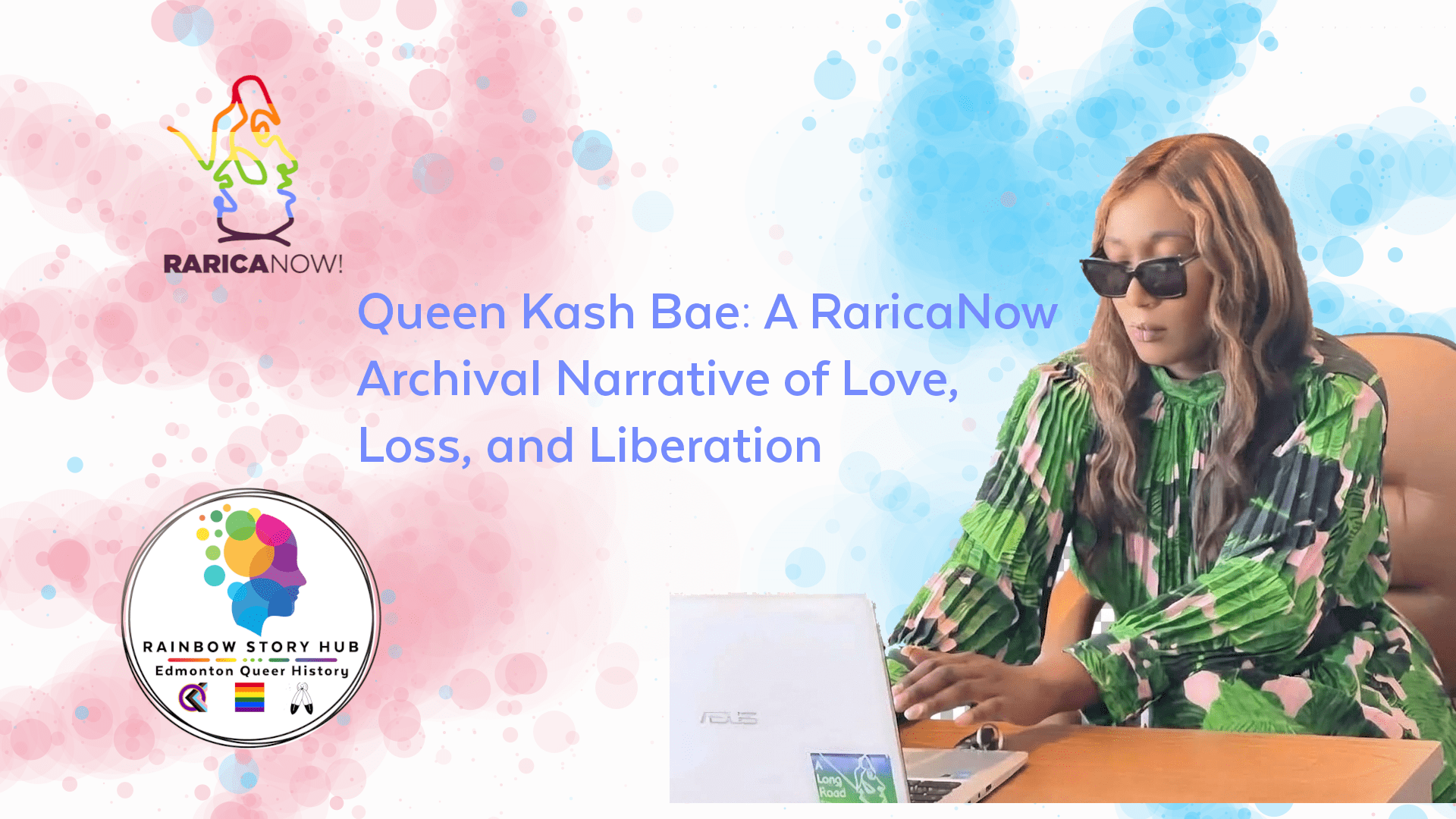
Today, Mama Kash serves as one of RaricaNow’s longest‑standing board members, her enduring love woven into the fabric of the organization. But the story of how she arrived here — and how her daughter, Queen Kash Bae, became part of RaricaNow’s history — is also the story of how RaricaNow itself grew into a lifeline for queer and trans newcomers across continents.
RaricaNow is a non‑profit organization founded in 2017 with a clear and urgent purpose: to promote human rights for LGBTIQ+ refugees and newcomers in Canada, and to raise awareness about the gaps in services and the struggles faced by this unique population. It emerged because queer and trans newcomers were falling through every crack — immigration systems, social services, housing supports, and community networks. RaricaNow stepped in where no one else did, building a space where safety, dignity, and belonging were not luxuries but expectations.
The organization began in a small community center, offering support groups, counseling, and educational workshops. Word spread quickly. People who had never before felt seen found a place where they could breathe. As demand grew, RaricaNow expanded into larger spaces, built more programs, and deepened its commitment to trauma‑informed, culturally grounded care. It became a home — not just in Edmonton, but across borders.
Among the many people whose lives intersected with RaricaNow, few stories illustrate the organization’s impact more powerfully than the story of Queen Kash Bae and her mother, Mama Kash.
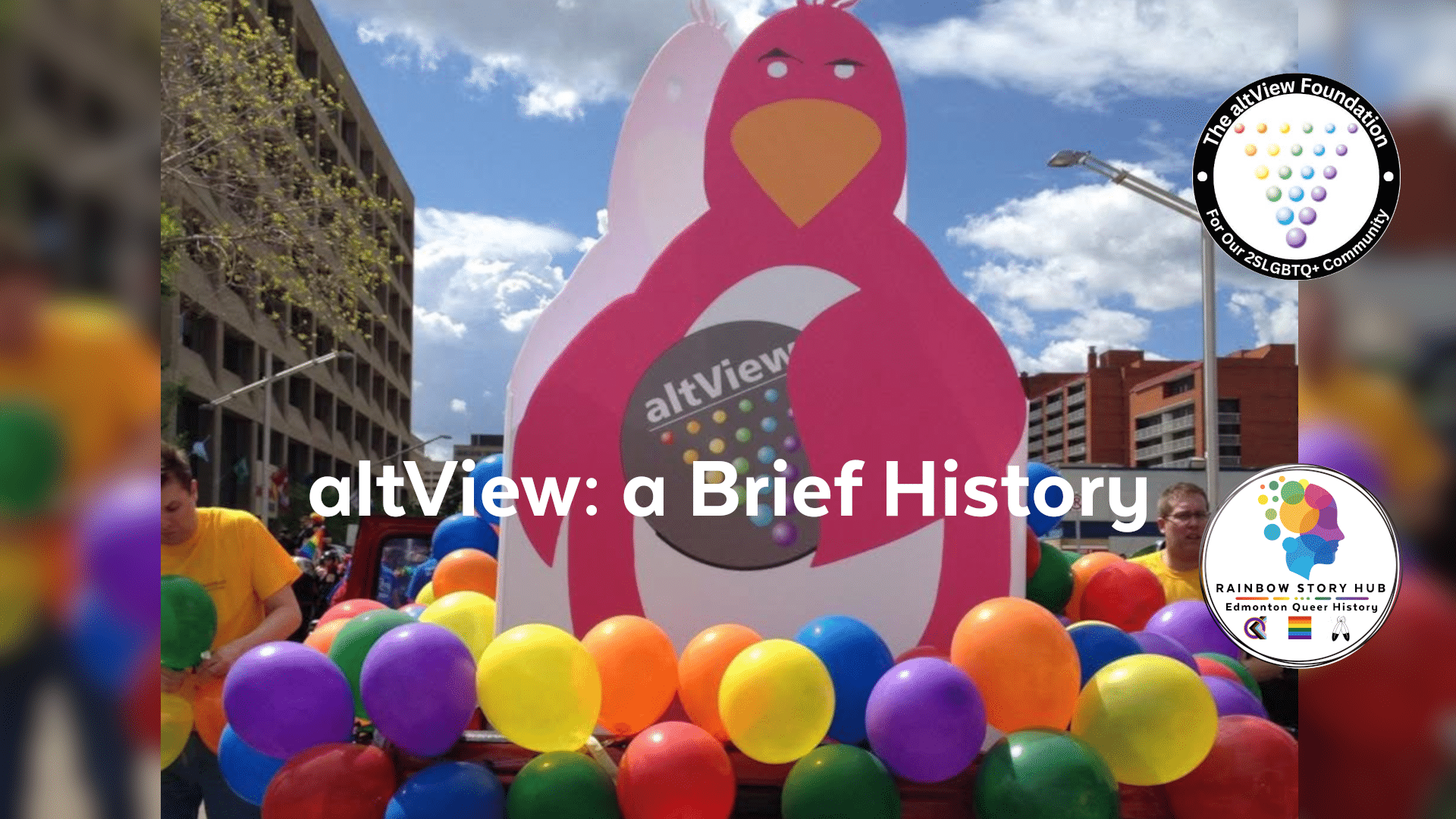
altView launched in February 2008, originally operating just as a group and meeting every other Tuesday evening at 6:30 PM, and in under a year the group began meeting weekly. They opened each gathering with an icebreaker question and moved into an activity. Over the years, they watched movies, learned to knit and crochet, had planning nights and Lego nights and game nights, wrote stories and made art, brought in guest speakers, picked random Ted talks to watch, made buttons, planned (but didn’t make) a printed toilet-paper “smear” campaign against ill-behaved politicians, had scavenger hunts at Ikea, painted an old donated school bus in rainbow stripes for Pride parades, invented a Twilight-candy game (they watched Twilight movies and ate candy whenever a character was creepy – but had to stop because youth felt ill from so much sugar), discussed religion or politics, and had so many potlucks. Afterwards, they headed out for coffee.
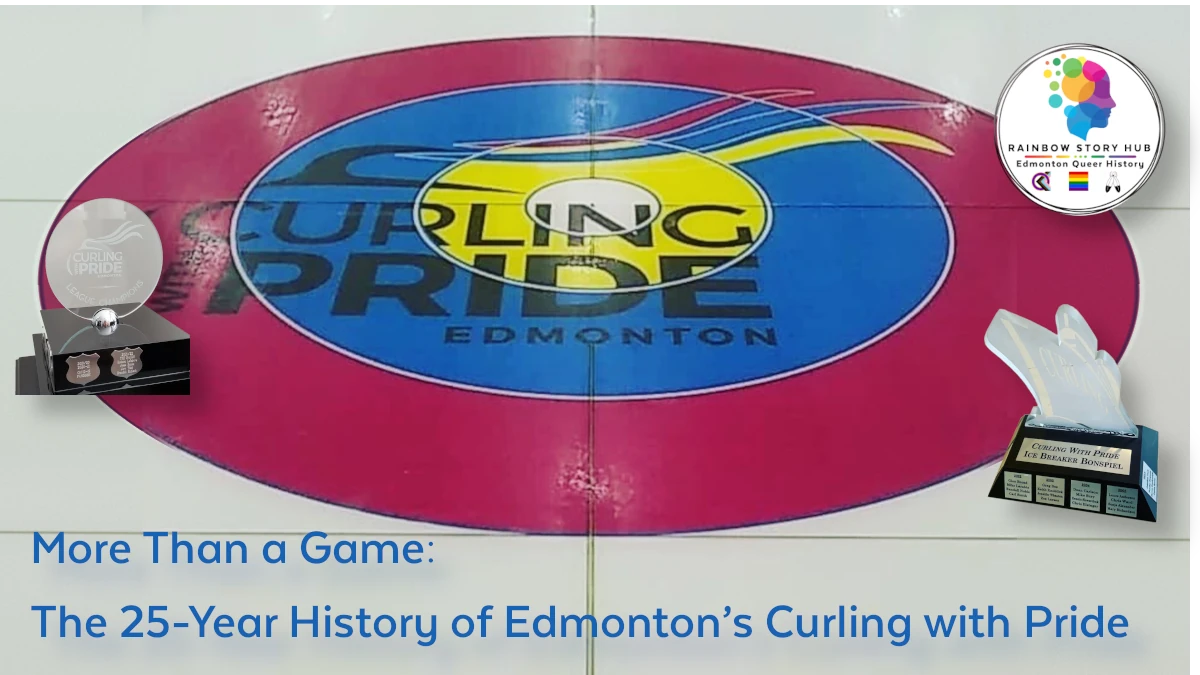
After moving to Edmonton in 1997, Lance Anderson Croft felt inspired to create a curling league for queer people in the city. Other Canadian cities such as Vancouver, Toronto, and Calgary had established queer curling leagues, and Edmonton would be next on the list of cities with one. As far as queer sports leagues go, Edmonton only had volleyball and badminton before Lance founded Curling with Pride (CWP).
The nature of curling is team based and Lance could not start the league on his own. To gauge and attract public interest, he created and put up flyers at the Roost (one of the gay bars at the time), the Gay and Lesbian Community Centre of Edmonton (GLCCE), and also had Kristy Harcourt mention it on her CKUA radio show for a couple of weeks.
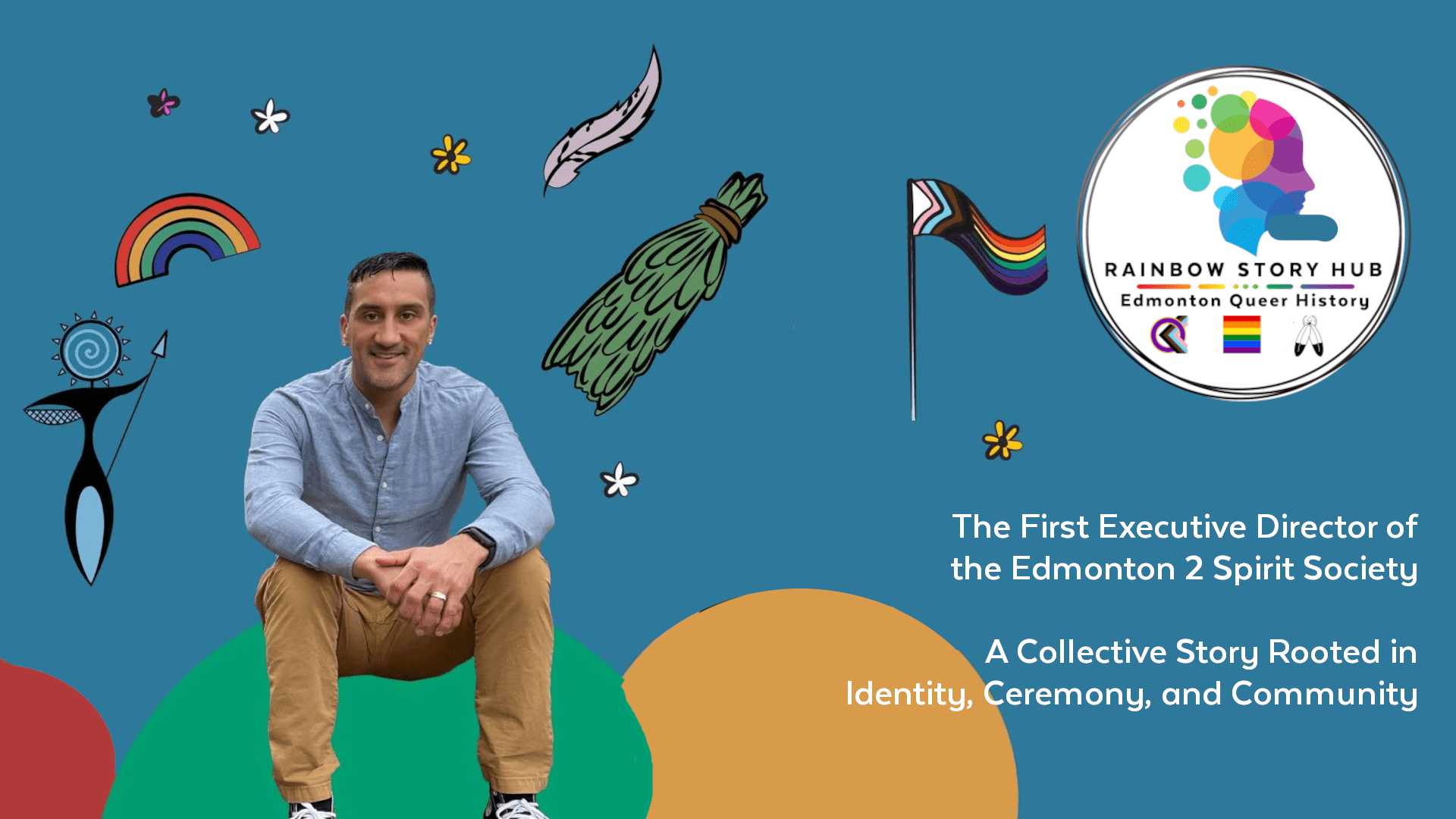
Before E2S existed, there were individuals across the Amiskwaciwâskahikan (ᐊᒥᐢᑲᐧᒋᐋᐧᐢᑲᐦᐃᑲᐣ) region, also known as Edmonton, quietly searching for cultural teachings that affirmed their queerness, their Indigeneity, and their place in the world. Among them was Jeffery Chalifoux (Jeff) who — who identifies as ihkwêw – one of many Cree genders teachings by kêhtêyayah (Elder) Jo-Ann Saddleback as she shared in ceremony — was navigating shame, closeting, and the search for belonging. He lived and volunteered in Edmonton’s inner city, attended recovery meetings, and learned from ceremony and culture. His journey mirrored the journeys of many Indigenous queer people reclaiming teachings that had been interrupted by colonialism.
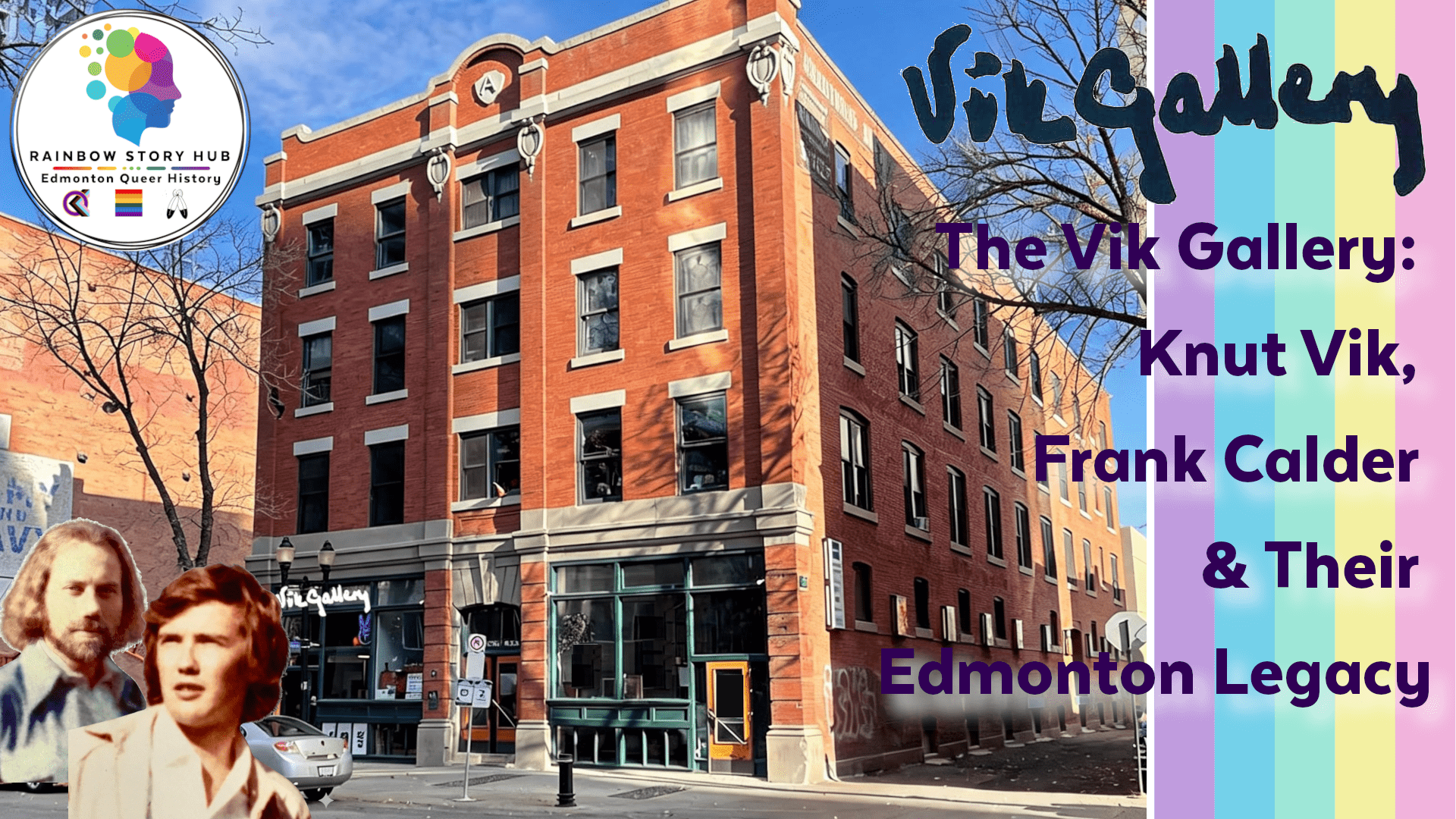
Dr. Knut Egil Vik (1933–2016) shaped Edmonton not through public prominence, but through sustained, quiet influence across medicine, the arts, and community life. A physician who graduated top of his University of Alberta class in 1957, Vik practised surgery, obstetrics, geriatrics, and addictions medicine—and was among the first Edmonton doctors to treat patients with HIV/AIDS during the early years of the epidemic, when many practitioners hesitated to engage.
In October 1983, Vik founded the Vik Gallery on the main floor of the historic Armstrong Block at 10129 – 104 Street, deliberately choosing a then-overlooked downtown to help revitalize the core. The gallery became a serious contemporary exhibition space, championing artists such as Joane Cardinal-Schubert and Jane Ash Poitras—Indigenous artists who would become central to Canadian art history. Vik also served on the boards of the Edmonton Art Gallery, Edmonton Opera, Alberta Ballet, and Theatre Network.
For 46 years, Vik shared his life with Frank Calder, co-founder of Calder Bateman Communications and the public-affairs strategist behind campaigns including the NHL’s Pride Tape. Together they rescued and restored the Wallbridge Residence, a 1910 Edwardian home in Groat Estates, securing its designation as a Municipal Historic Resource in 2008.
Their story weaves together medicine, art, civic life, and heritage stewardship—a same-sex couple whose impact on Edmonton was real, lasting, and often understated. This is a history of structural influence: the kind that builds a city quietly, one cause and one building at a time.
In this Gaywire Fundrive Special from 1999, Kristy Harcourt interviews Dan Savage about his work – his sex ed advice column, then-recently published book, Savage Love, and how one can stretch Canadian radio profanity guidelines– all while having a tea party, live on air, in HUB Mall on the North Campus of the University of Alberta. Listen to this piece of Edmonton Queer History today! Thanks to CJSR FM88 for allowing us to bring this unique audio episode out of the vaults.
Womonspace emerged as a response to the glaring lack of safe spaces where lesbians could socialize and participate in activities without facing judgment at best and outright discrimination at worst. Two women, Jeanne R. and Ann E., were inundated with complaints from the women they counseled at Gay Alliance Toward Equality (GATE) — concerns about the absence of a lesbian social scene — and decided to do something about it.
From 1994 on, Edmonton’s own Village People Revue featured prominently in many shows, at bars all over Edmonton, and indeed, western Canada. The group started off as an ISCWR fundraiser but soon took on a life of its own. Below, find a link to a December 2000 article originally published in Times.10 Magazine that tells the origin story of this group of characters. Just like with the real troupe, non-Indigenous persons wearing a headdress was never appropriate. Pictures are included for the sake of historical accuracy, not to further perpetuate insensitivity. The last official show of Edmonton’s Impersonation Revue…
Fifteen years ago, Aaron Granley and Daren Kavich were sitting at Boots, sharing a few pitchers of beer, and bitching how no one came out. Daren was recently back from Vancouver, where he’d attended one of the successful Bearracuda events that happened regularly there, and they lamented that nothing like this happened in Edmonton. There’d been bear groups before, but nothing was active. As Daren told Aaron stories about what the scene was like at Bearracuda, Aaron got more and more irritated that local bears and bear-admirers and bear-adjacents had to travel elsewhere for a party like that. Or…
In 1996 Ron Byers, a member of the Imperial Sovereign Court of the Wild Rose, built their very first website on the Geocities – a web hosting service that allowed users to create and publish websites for free. Recently the files used were found and so we have uploaded them to our website so you can check this “historic” part of our history. Click the pic below to access the website. Please note that it was NOT built to be mobile friendly (mobile internet did not exist then) and is best viewed on a desktop or larger tablet.
This collection features digitized copies of the Imperial Sovereign Court of the Wild Rose Coronation Ball Programs. The Edmonton Queer History Project has been working with the University of Alberta Library & MacEwan University Library to support free and public access to important items of historical significance to Edmonton’s 2SLGBTQ+ communities. The collection is preserved on Archive.org and is accessible to anyone. Please click the link below to access the ISCWR Collection. The Imperial Sovereign Court of the Wild Rose’s mission is to raise funds, through activities by the ISCWR, for charities and other organizations which either provides direct services to the…
We use technologies like cookies to store and/or access device information. We do this to improve browsing experience and to show personalized ads. Consenting to these technologies will allow us to process data such as browsing behavior or unique IDs on this site. Not consenting or withdrawing consent, may adversely affect certain features and functions.
Functional
Always active
The technical storage or access is strictly necessary for the legitimate purpose of enabling the use of a specific service explicitly requested by the subscriber or user, or for the sole purpose of carrying out the transmission of a communication over an electronic communications network.
Preferences
The technical storage or access is necessary for the legitimate purpose of storing preferences that are not requested by the subscriber or user.
Statistics
The technical storage or access that is used exclusively for statistical purposes.The technical storage or access that is used exclusively for anonymous statistical purposes. Without a subpoena, voluntary compliance on the part of your Internet Service Provider, or additional records from a third party, information stored or retrieved for this purpose alone cannot usually be used to identify you.
Marketing
The technical storage or access is required to create user profiles to send advertising, or to track the user on a website or across several websites for similar marketing purposes.

 Ruth DyckFehderau

 Cherese Reemaul
 Rhys Primus
 Ron Byers

 Terrence Adams

 Aldynne Belmont

 Rob Browatzke


 Rainbow Story Hub