
The year was 1991 and Darrin Hagen (in those days, just as widely known as Gloria Hole) was vexed.
He had stood up to the new owner of the Edmonton gay bar Flashback and had consequently lost his bartending job. Alberta’s homophobia was getting so much airtime. The Delwin Vriend seven-year saga for sexual orientation as a protected human right had kicked off. The procession of AIDS-related funerals was getting longer. And, to top it off, the provincial government was having conversations around “community standards” and arts funding, conversations that smelled exactly like censorship of all things queer.
What was a young just-fired queen to do?
Just then Ruth Smillie, the Artistic Director of Catalyst Theatre, called. She had a mandate to stage art from marginalized communities, and she wanted to make something entirely new: an event that gathered (and thereby celebrated) queer arts and artists on an Edmonton stage. It was an open secret that Edmonton had a healthy number of queer artists – what Canadian city doesn’t? – but to showcase them? To celebrate queerness and queer art at exactly the point in time when provincial authorities were reaching for ways to censor it?
Unheard of.
Smillie wasn’t sure such an event would be welcomed. She wasn’t even sure where to find all the queer artists. And the other problem was that the climate was so homophobic that it would be dangerous to do publicity of any sort; they could allow no advance advertising and no media in the building. Any communication with the public, then, would have to be word of mouth alone.
Did Hagen think such an event was achievable? Was his company Guys in Disguise interested in helping her get it off the ground?
The first Loud ‘N Queer Cabaret happened that year on the Catalyst Stage. They prodded a handful of local queers to write something, anything. Smillie hired four actors, paid for two days’ rehearsal time, and directed the short pieces herself. The entire team worked together to tighten any pieces that were still too raw, too sprawling, or too underdeveloped. Hagen crafted simple sound designs for each piece and hosted the event himself from behind his keyboard. And, in lieu of media, publicist Kevin Hendricks quietly put the word out in the queer community.
The event sold out altogether. There wasn’t even standing room. The first question – about whether such an event would be welcomed – had been answered.
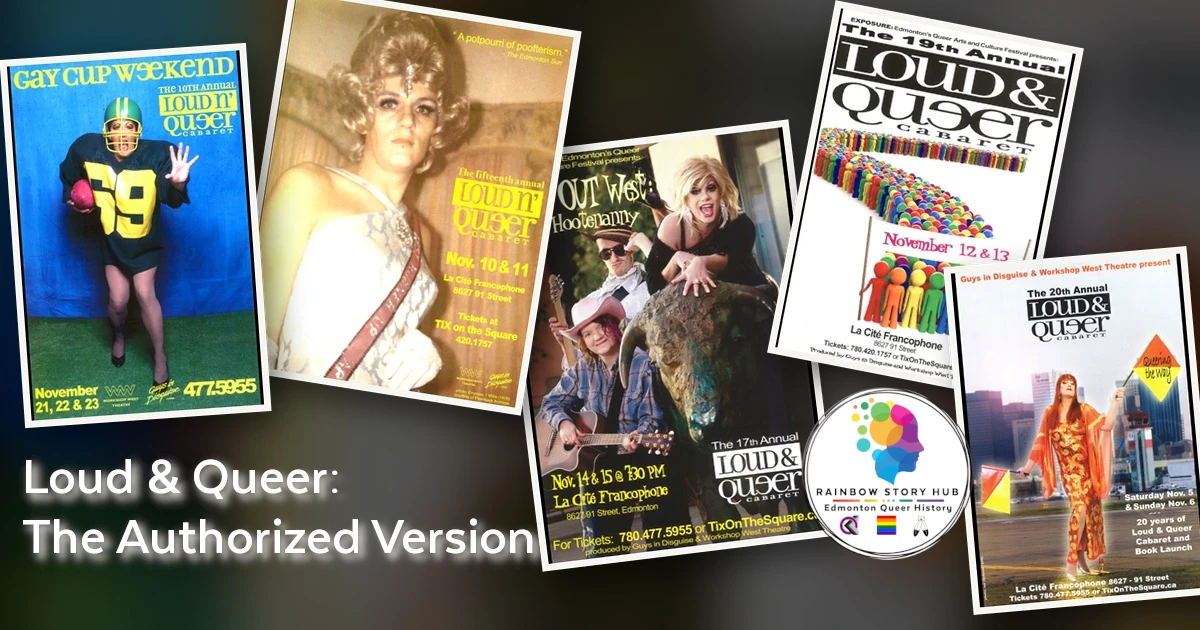
For each of the next twenty years, with the exception of ’96, Edmonton had a November Loud ‘N Queer weekend. One year it was permanently renamed as Loud & Queer. At various times it was directed by Smillie, Jonathan Christensen, David Mann, Jacob Banigan, Ron Jenkins, Darrin Hagen, and Michael Clark. At various times it took place in Catalyst Theatre (both the original Garneau location and the current Gateway location), Third Space, La Cité Francophone, and Westbury Theatre. Eventually it moved from being a Catalyst Theatre event to being a Workshop West Theatre event. And within three years of inception, it was so popular with audiences and artists that the Cabaret stretched to two consecutive evenings, each with fifteen performances, three acts, and two intermissions (read four-plus hours).
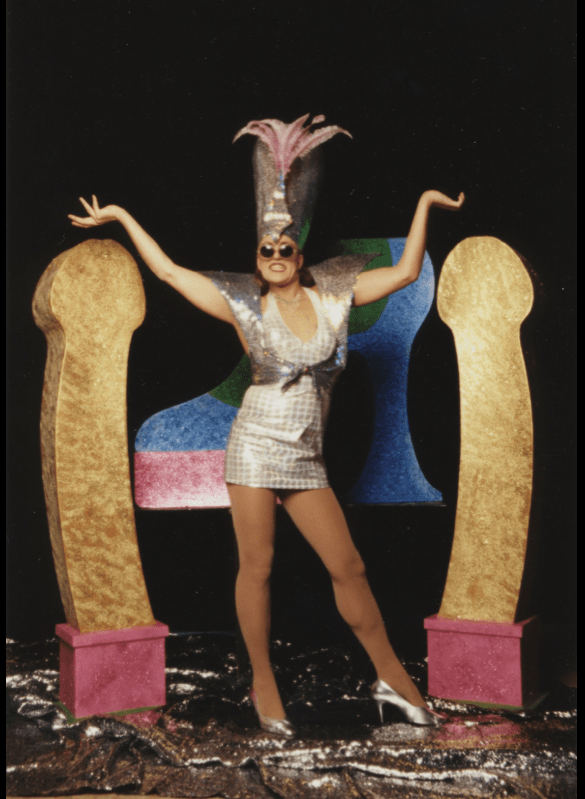
From the Guys in Disguise Collection
Short plays performed by the four professional actors anchored every show, but in fact an impressive range of arts found their way to the Cabaret stage: poetry, prose readings, interviews, live sex advice, radio plays (complete with foley artist), marionettes, hand puppets, dance, belly-dance, performance art, drag artist(e)s, storytelling, beat-boxing, letter-reading, film, so much music – and more. If it was queer-friendly and (hopefully) no more than fifteen minutes, it had a home on the Loud & Queer stage. Every single time the Cabaret was co-produced by Guys in Disguise. And every time, it was standing room only.
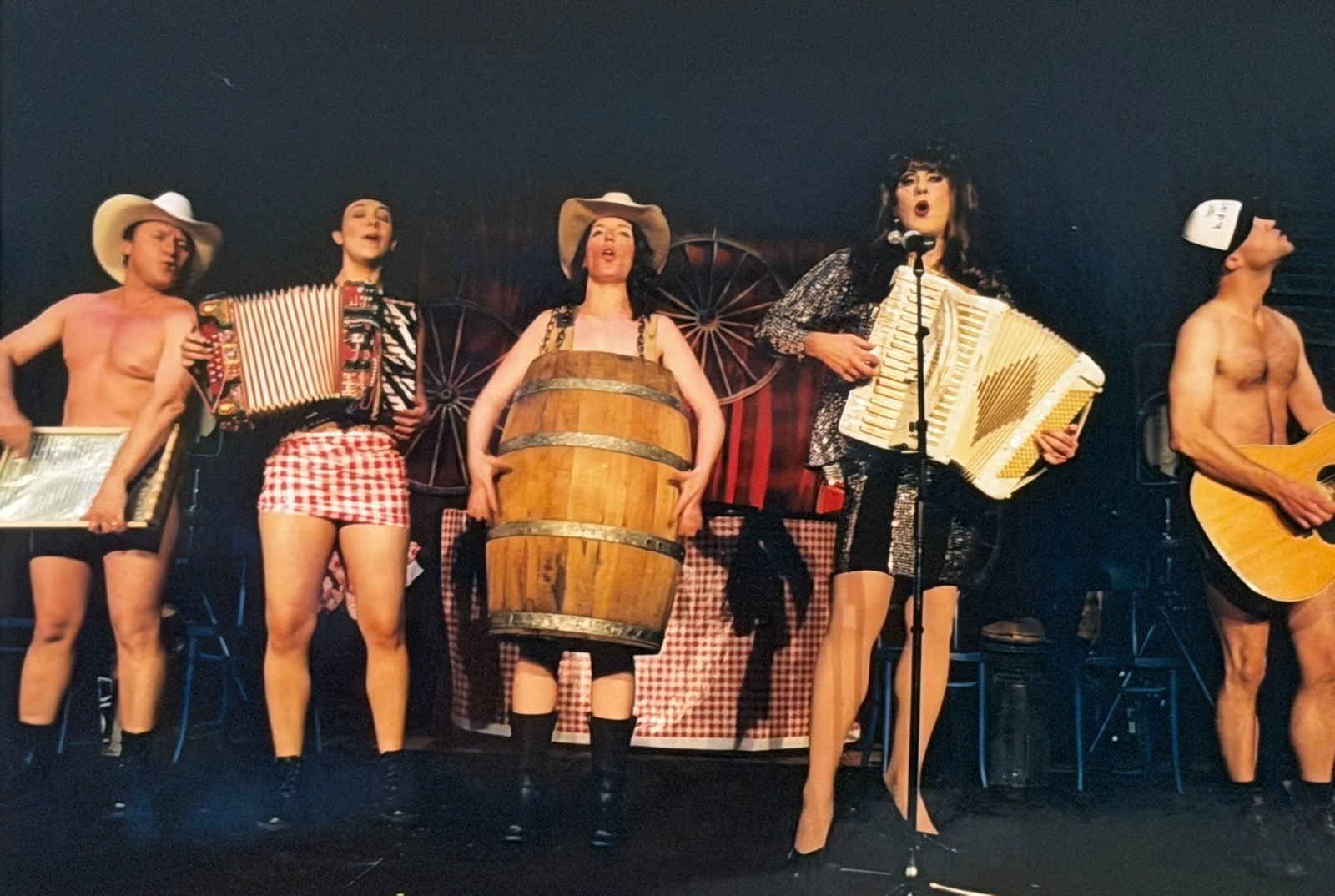
(L-R Harvey Anderson, Lora Borovold, Caroline Livingstone, Gloria Hole, Chris Fassbender.)
By 1995, the advent of HAART meant that AIDS was loosening its death grip, but there was still plenty to be vexed about. That year, ITV reporter Boni Fox asked to do a media preview of the Cabaret and Smillie allowed it. The segment ended up on a series called “You Paid for It.” It included wildly false claims that all Loud & Queer writers and actors were gay (in fact, that year several writers and all the actors were NOT gay). The segment also included Jason Kenney falsely stating that the event had been funded by “30,000 tax dollars” (in fact, ticket sales and sponsors provided all revenue), and that a new queer art event was “a ridiculous excuse for theatre.” Eventually, there was a letter-writing campaign, an investigation, the reporter was disciplined, and ITV apologized.
Reverberations of the homophobia outside the doors sounded on the Cabaret stage. You could hear it in onstage conversation about queer-targeting murderers. Guest Dan Savage mentioned a friend falling victim to Jeffrey Dahmer and host Hagen told of fellow drag queen Lori St. John pretending to pick up a man she recognized as the murderer of a fellow queer – and then calling the police. And you could hear it in the myriad ways oppression became funny. When televangelist Jerry Falwell couldn’t stop talking about “unrestrained homosexuality,” Peter Field wrote a short piece called “The Unrestrained Homosexual” in which a gay man did unrestrained things – like buy groceries. And when anti-queer activist Bill Whatcott picketed a queer Hagen-hosted Regina event with misspelled picket signs (“Sodamy”), and American anti-queer crusader Rev. Fred Phelps tried to enter Canada to protest a Laramie Project production, hosts Hagen and Lulu LaRude telephoned Rev. Phelps from the Loud & Queer stage to teach him (with audience participation) how to spell “sodomy.” And when the Supreme Court finally ruled in favour of Delwin Vriend, Kristy Harcourt – another favourite Loud & Queer co-host – begged the audience not to relax because the world was still a scary place for queers and there was so much work to do.
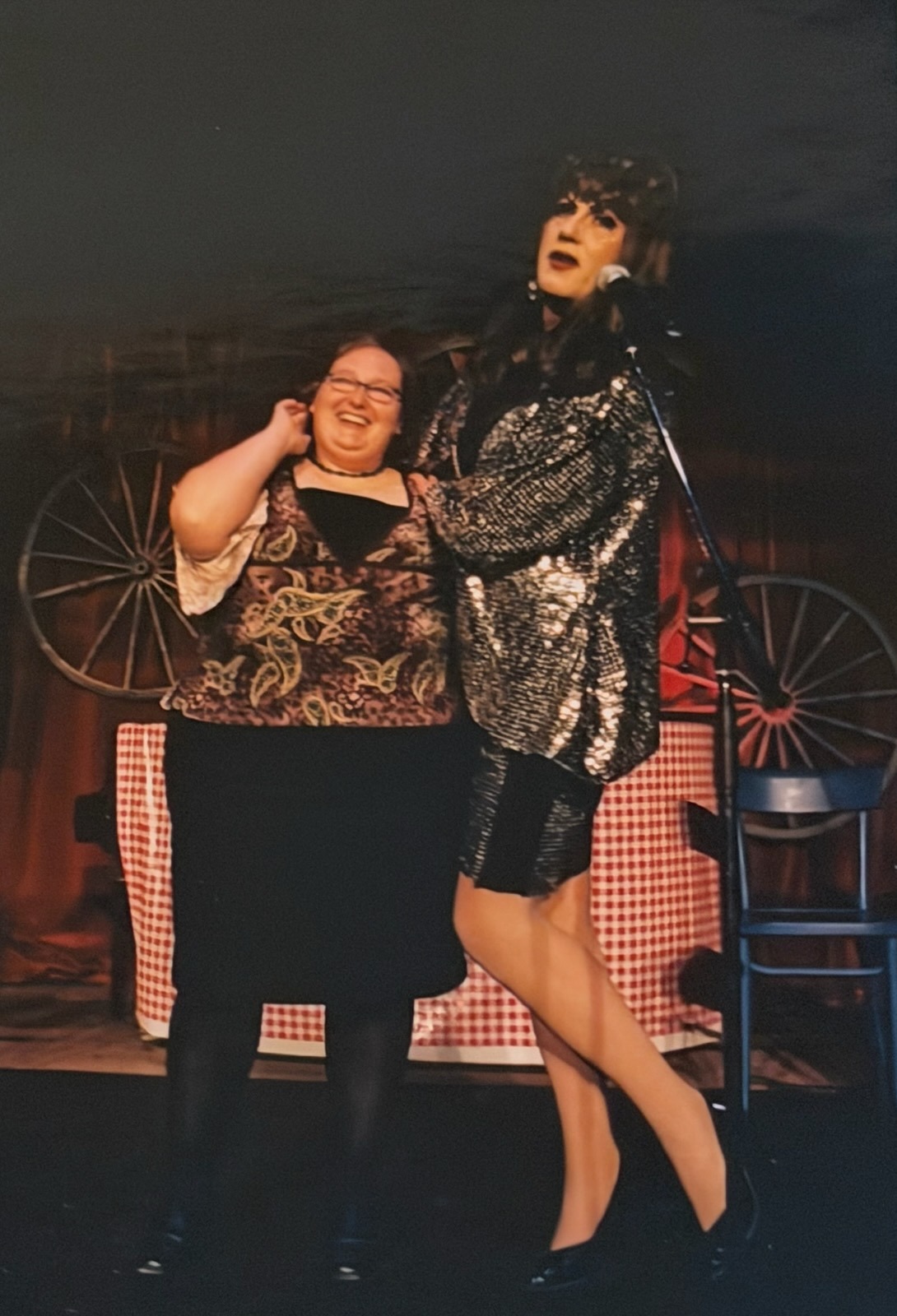
From the Guys in Disguise Collection.
As word crossed the continent, prominent queer artists and activists – Ronnie Burkett, Rosemary Rowe, Dan Savage, Buck Angel, Laurie McFayden, Brad Fraser, Trevor Anderson, Susan Jeremy, Daniel MacIvor, – came to Edmonton and did their thing on the Loud & Queer stage.
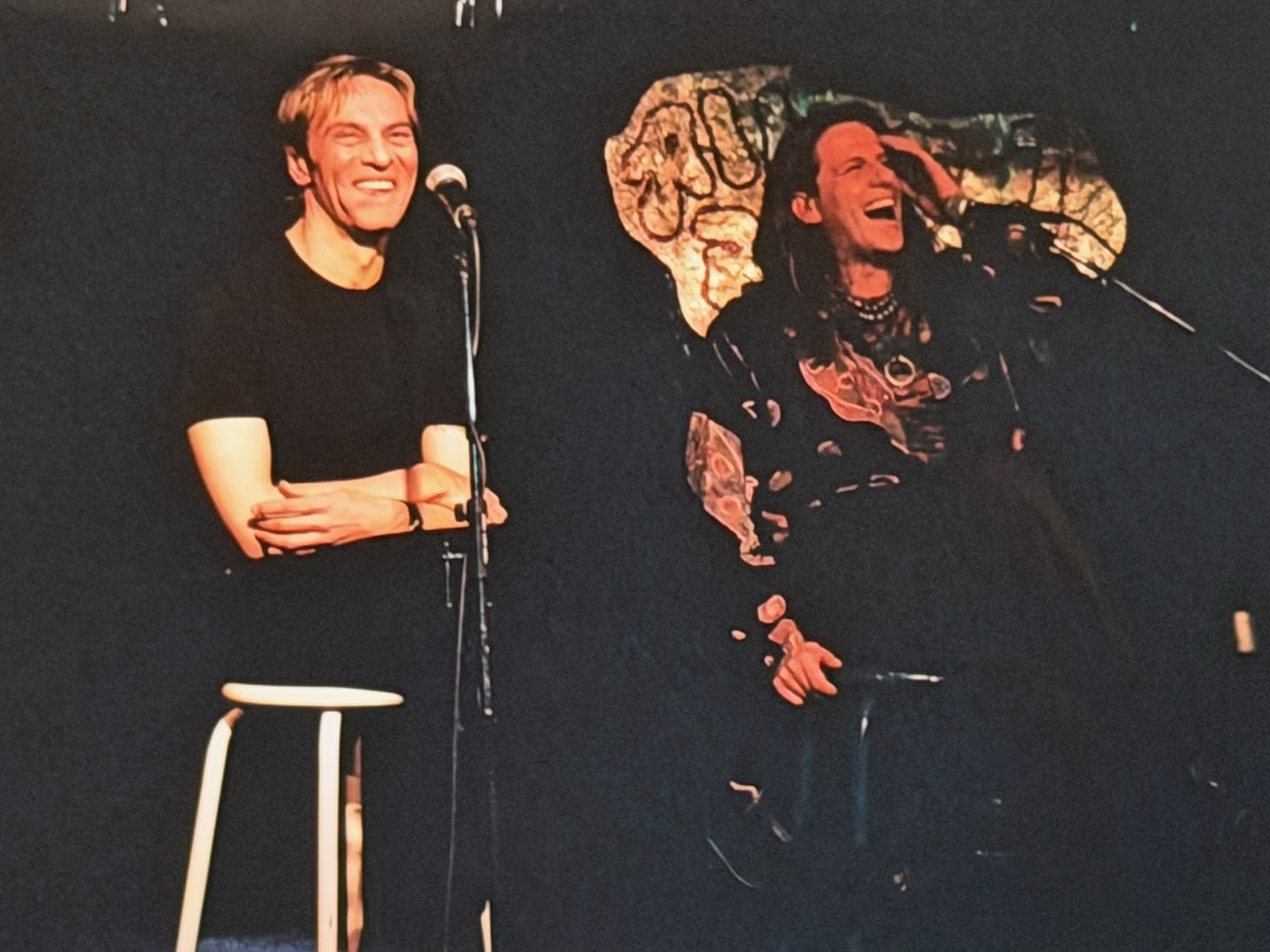
From the Guys in Disguise Collection.
But in truth, the big names were window dressing. The Cabarets were actually about carving out stage space for hitherto unseen queer art, about providing the necessary support and safe space for unknown queers and allies to ply their craft, whatever their craft was, and about allowing people who weren’t necessarily writers but who had something to say to have a voice. If the writing was shaky, the Loud & Queer team could be counted on to make it stage-worthy and always, endlessly entertaining. And between each act, as stage hands re-set the stage, we were treated to the most memorable act of all – the constant improvised hilarity of host Hagen being heckled by Councillor Michael Phair who sat in the audience and had clearly missed a calling as a stand-up comic.
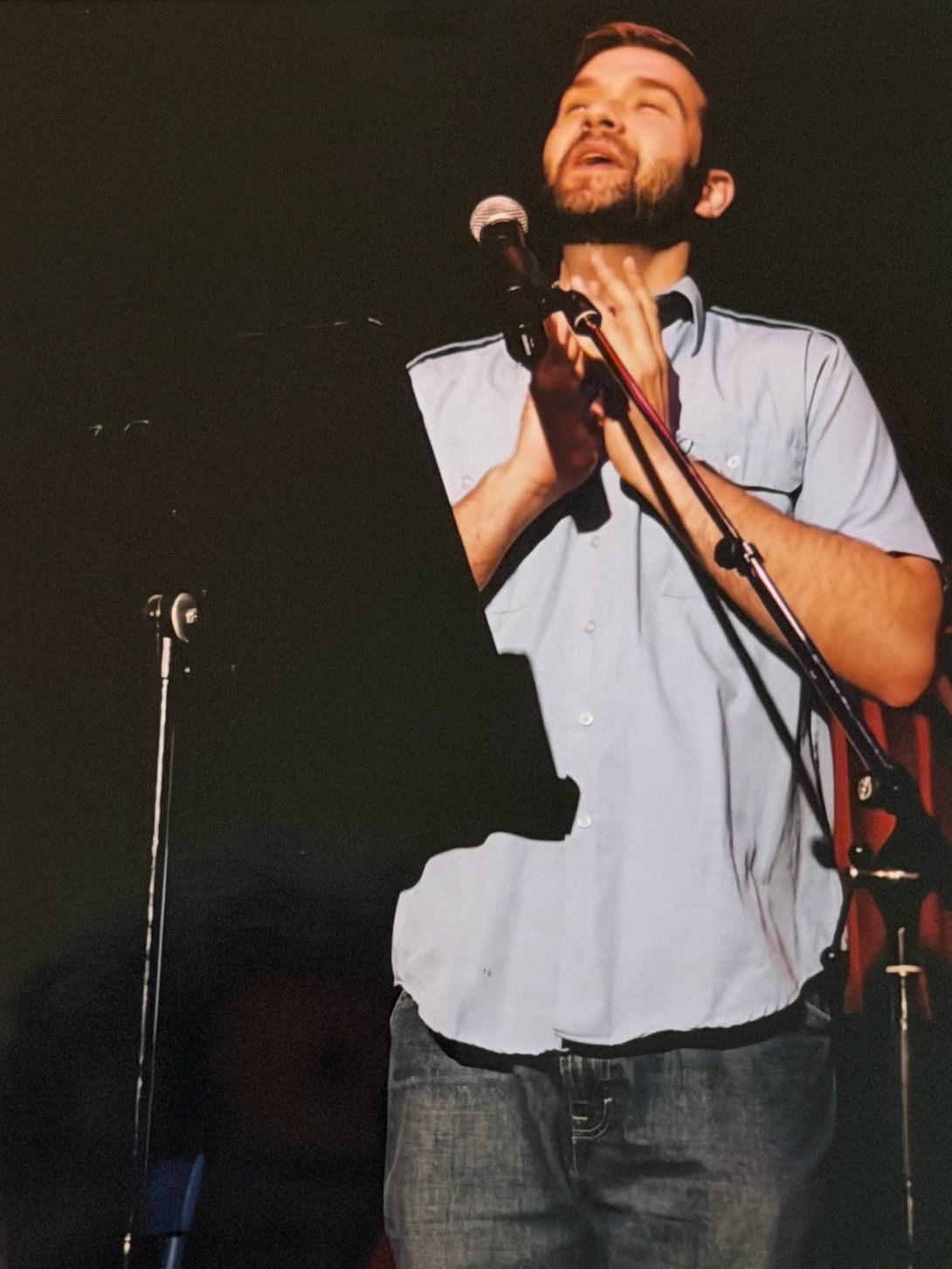
From the Guys in Disguise Collection.
It’s difficult to describe here the energy of those dark November nights. Or the relief of entering an absolutely packed venue where everyone in the room understood the queer in-jokes, everyone knew the dangers of being queer in a conservative province, and everyone appreciated that the newest most tentative piece written by a young queer just trying to breathe mattered as much as the piece written by the most famous. Many of those tentative pieces found their way into publication and into mainstream international venues.
Over the years, one piece at a time, Loud & Queer showed that art from the queer communities was indispensable to Albertans. The “community standards” conversation had irrevocably changed.
In 2011, Loud & Queer took a three-year hiatus and returned in 2014 for one last hurrah at the Westbury Theatre. It had become Western Canada’s longest-running queer arts event, it had staged more than three hundred pieces, and it had launched the careers of too many queer artists to list. Eventually, twenty-two of the pieces were published in Brindle & Glass’s Queering the Way: The Loud & Queer Anthology (2011), edited by Darrin Hagen himself.
(Authorized by Darrin Hagen/Gloria Hole)
Pics
From the Guys In Disguise Collection
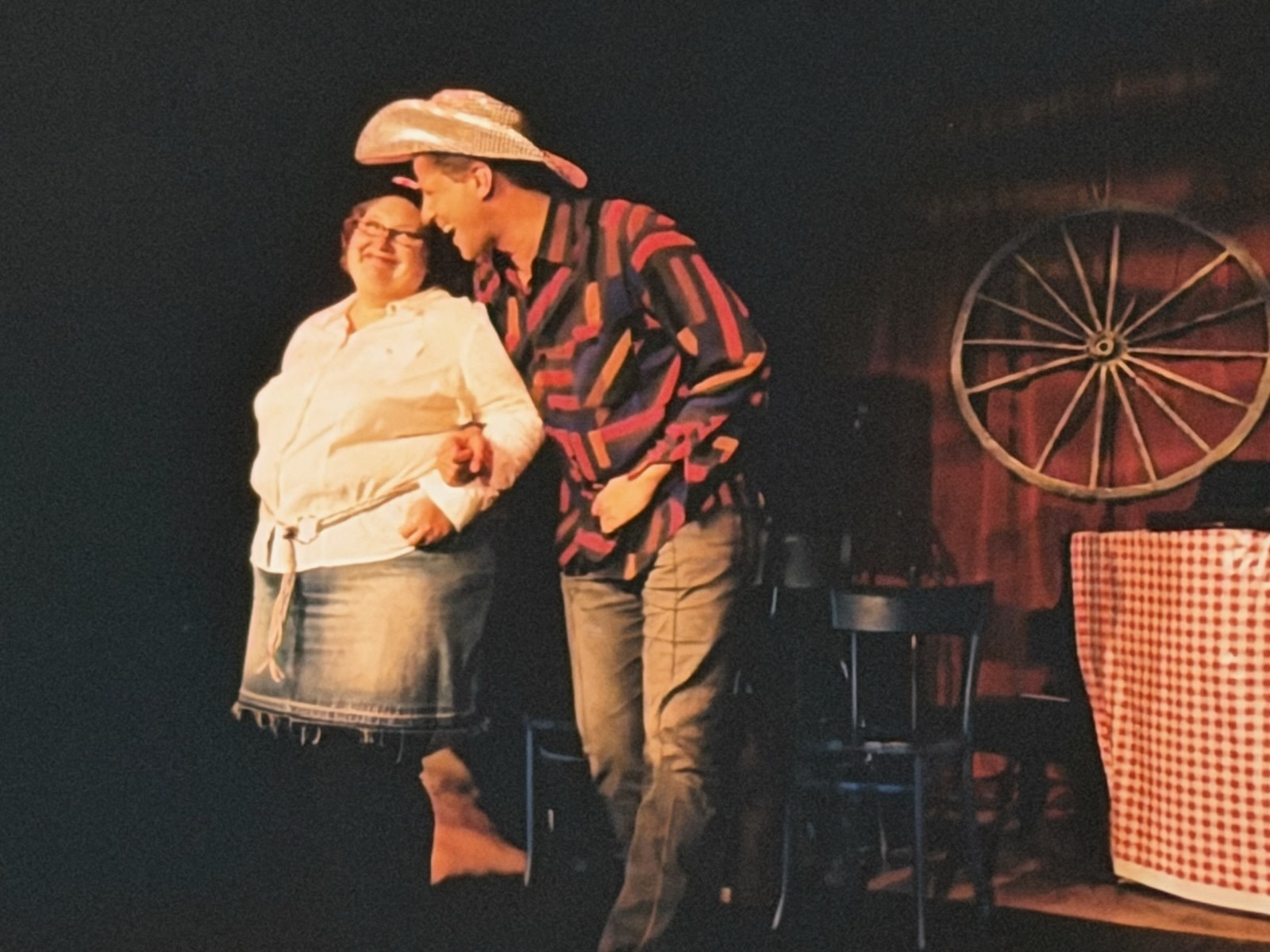
From the Guys in Disguise Collection.
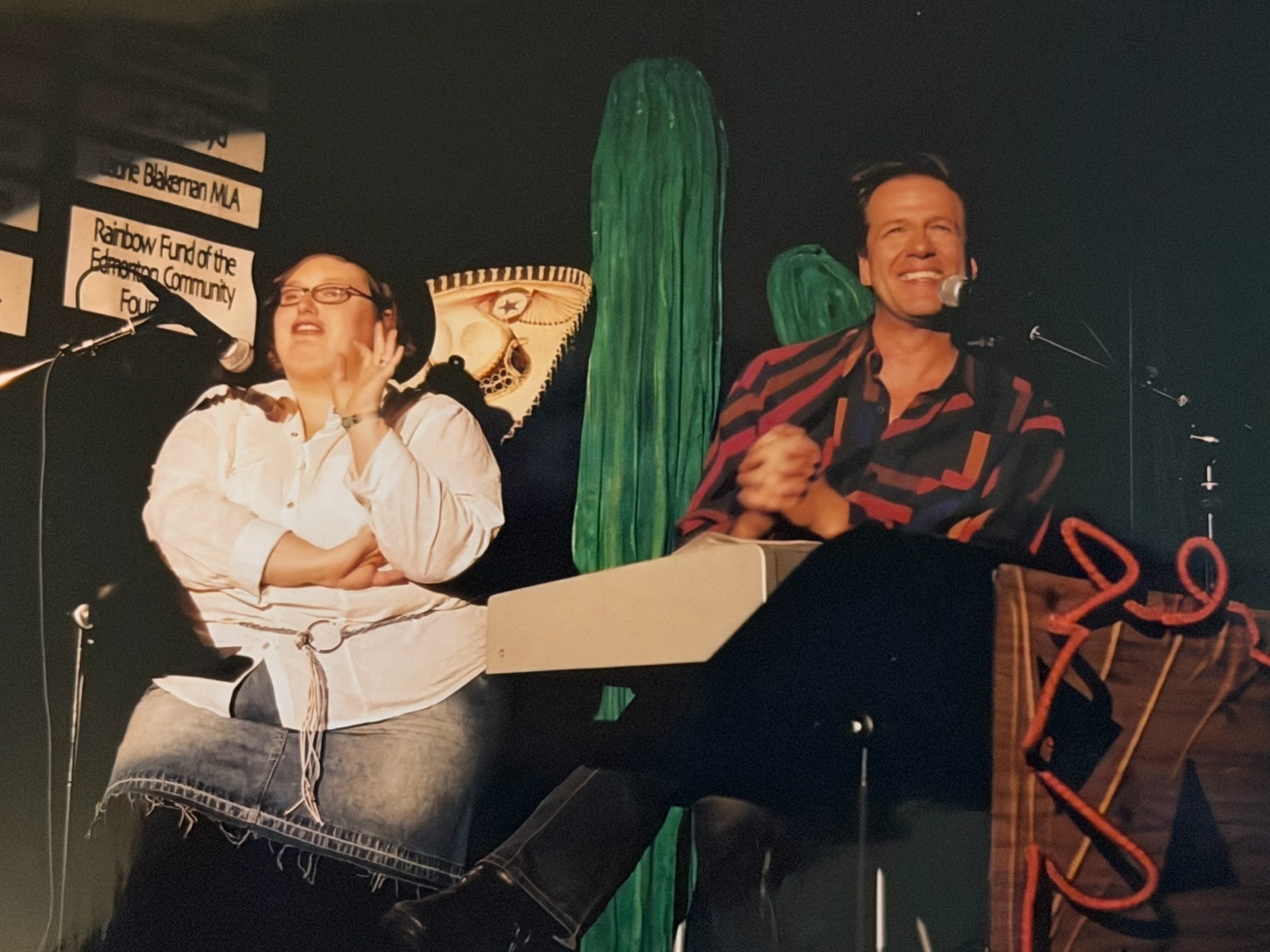
From the Guys in Disguise Collection.
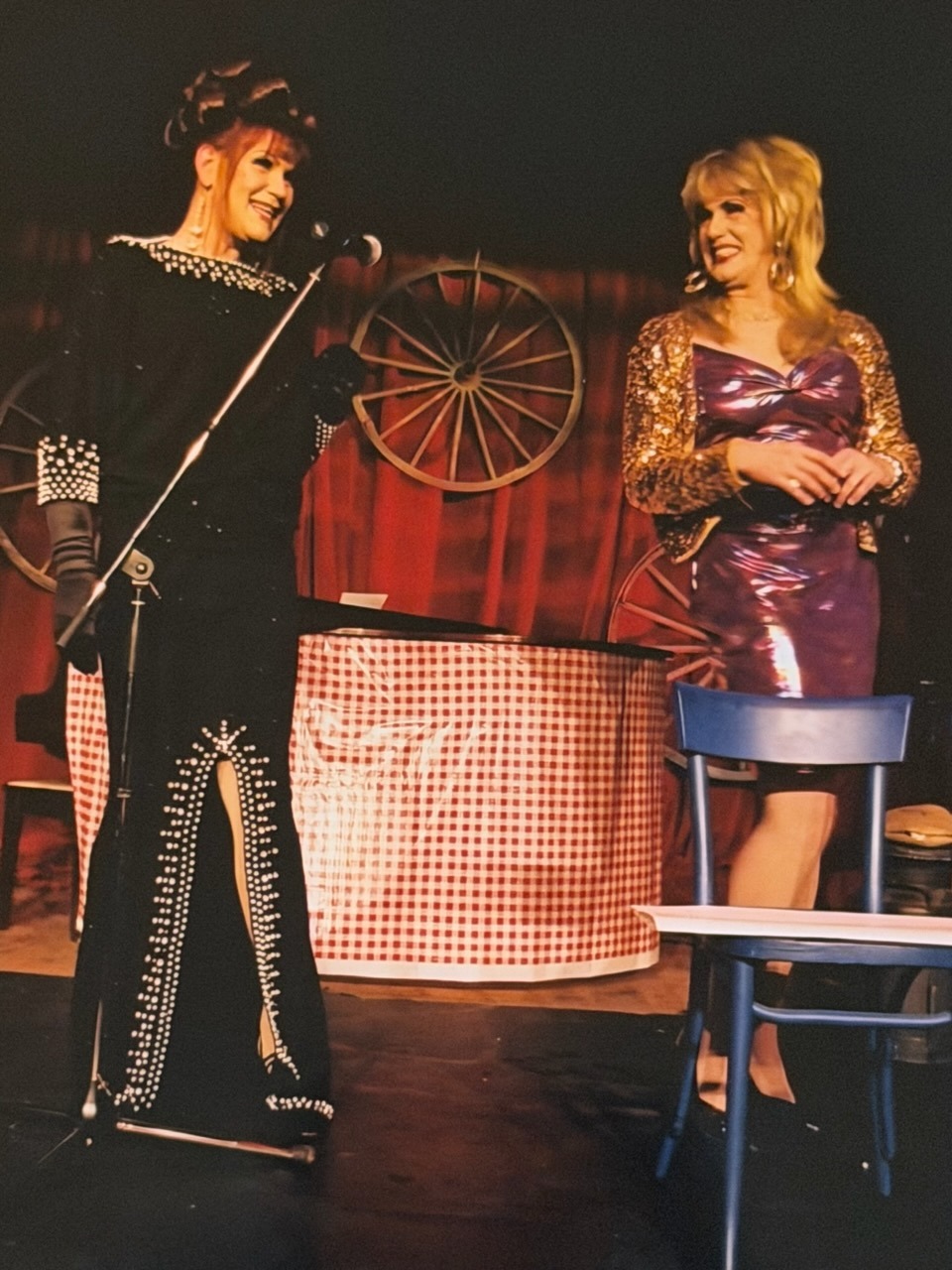
From the Guys in Disguise Collection.
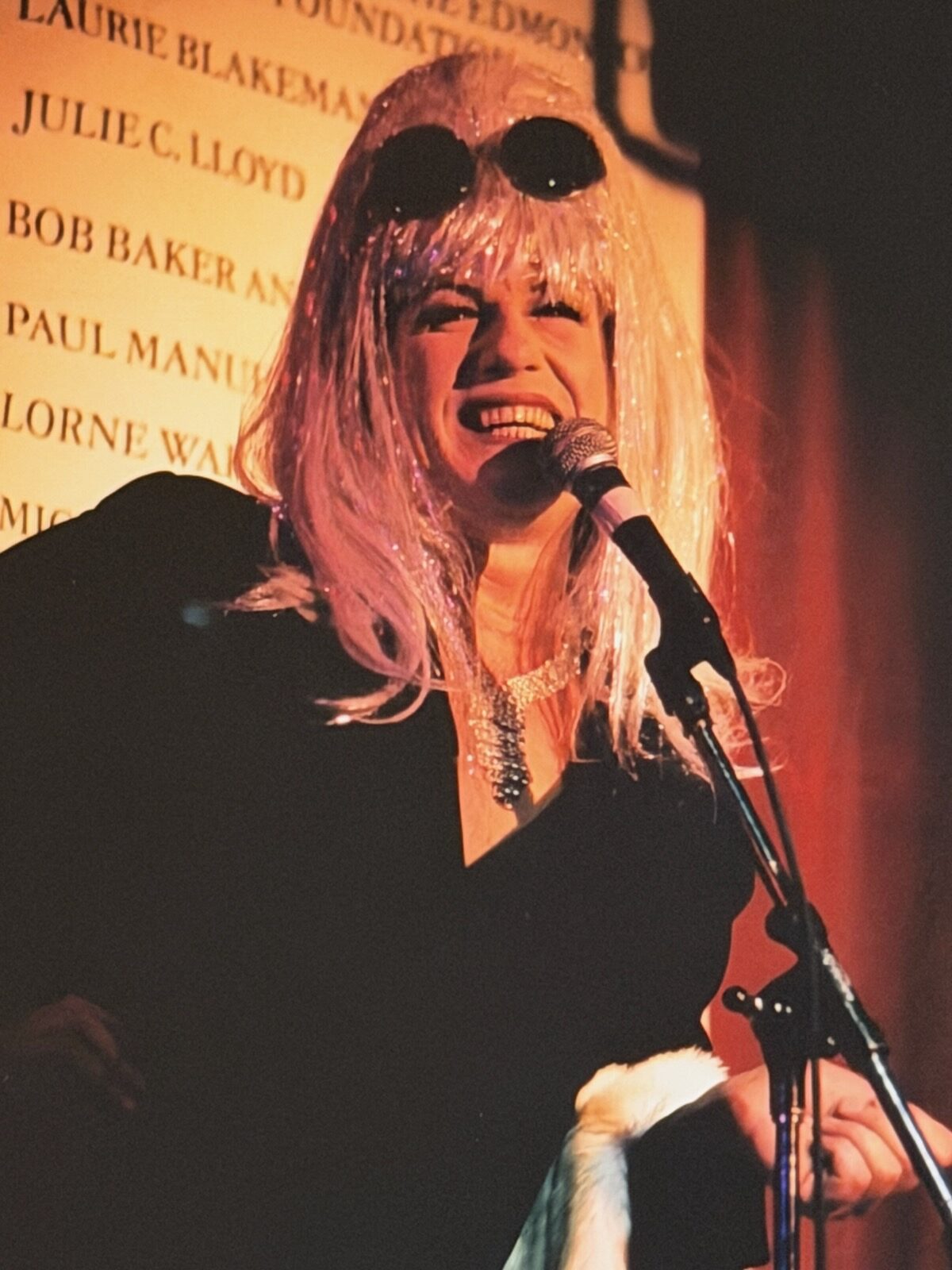
From the Guys in Disguise Collection.
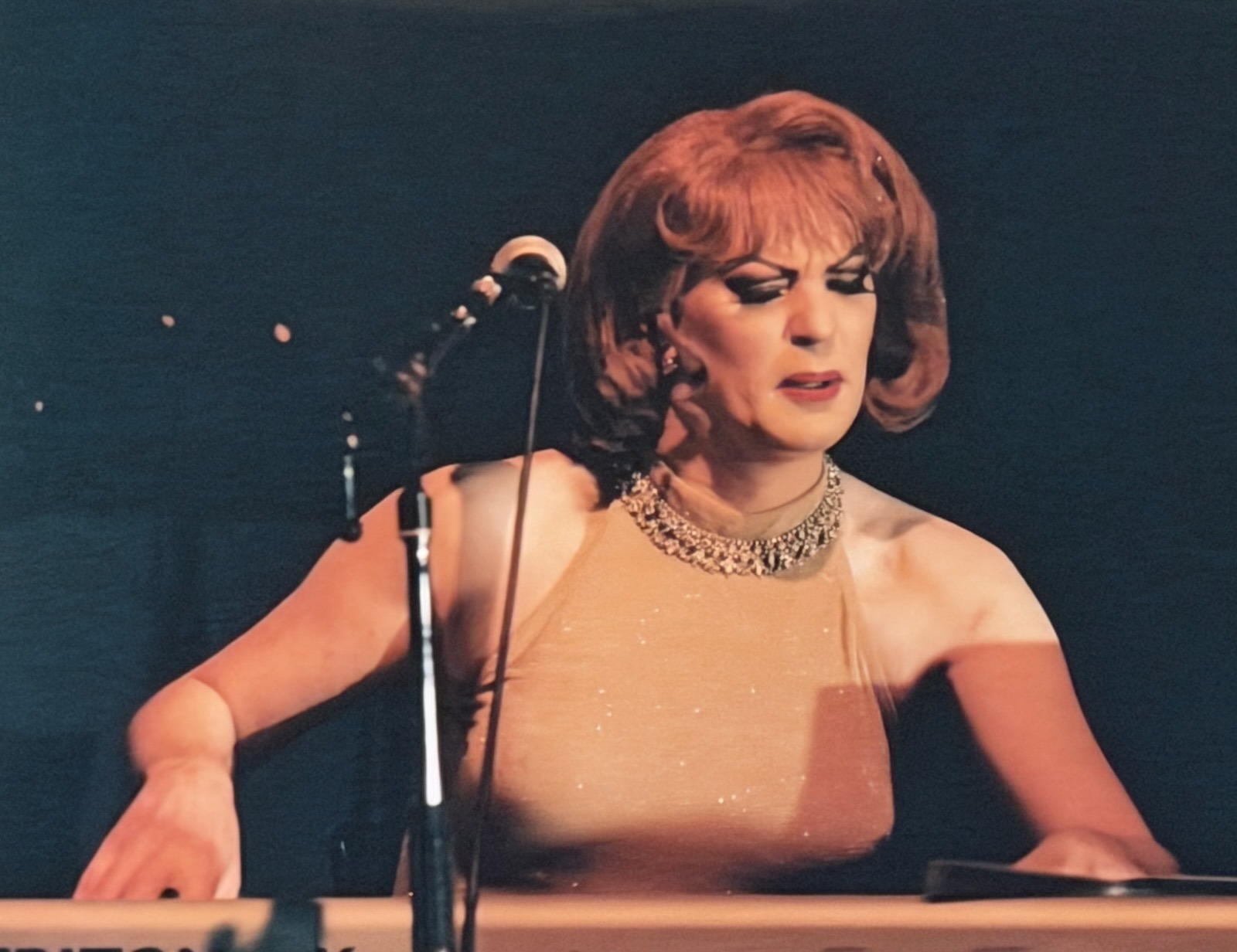
From the Guys in Disguise Collection.
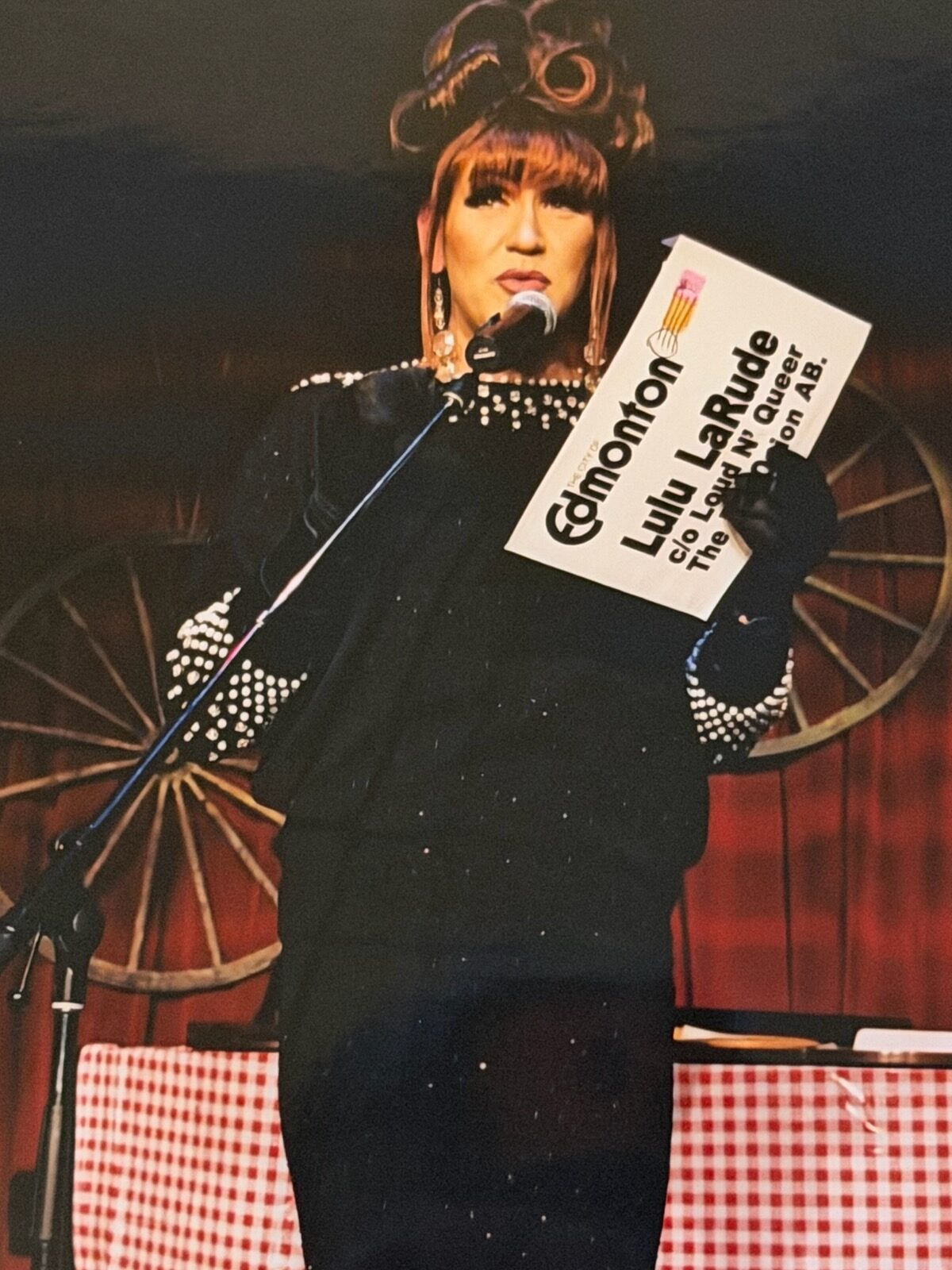
From the Guys in Disguise Collection.
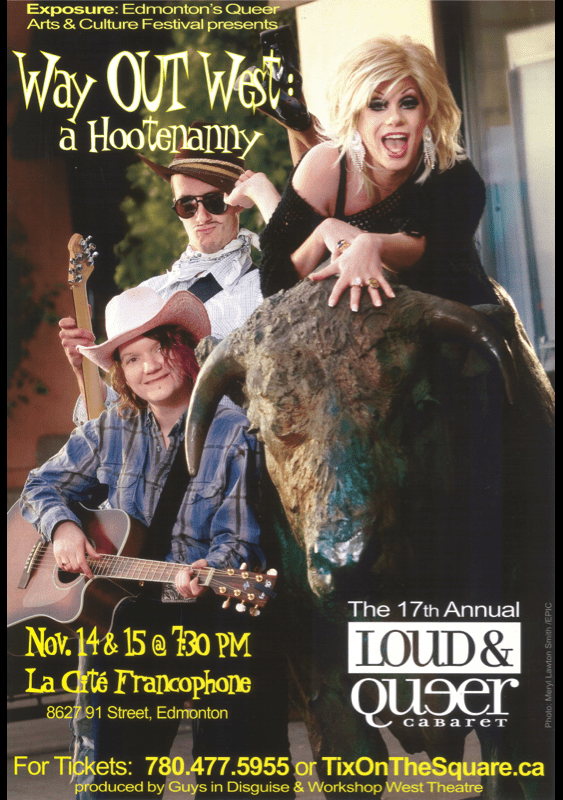
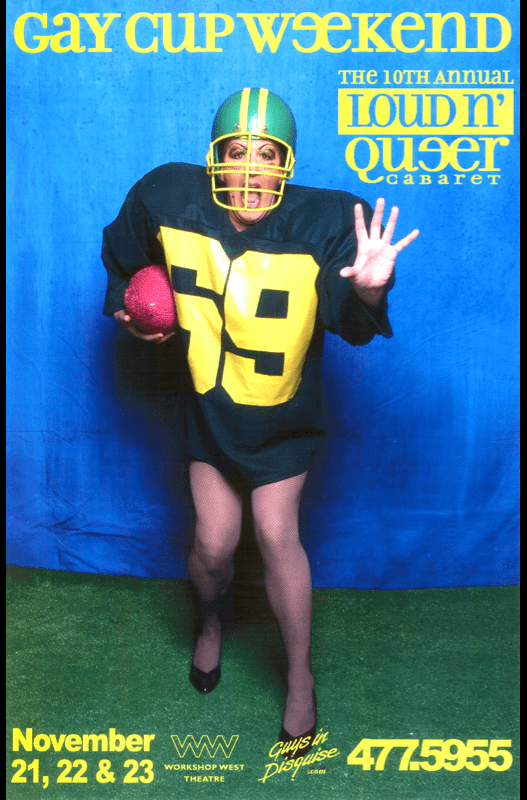
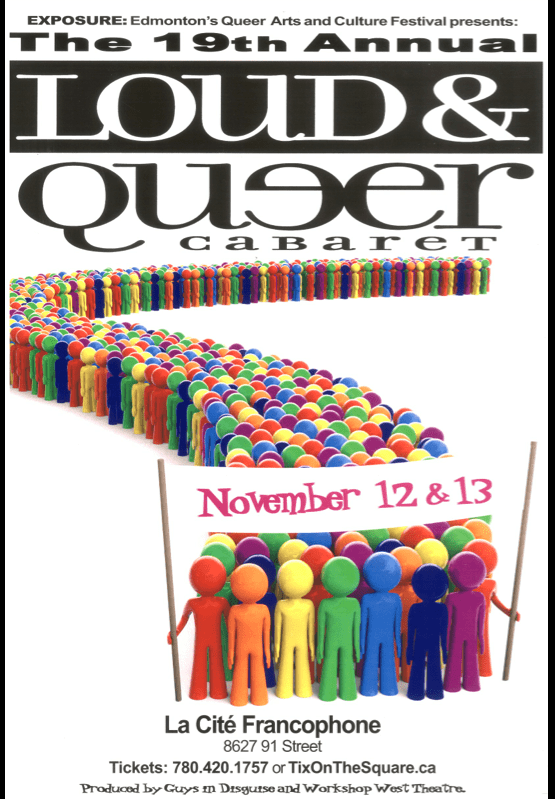
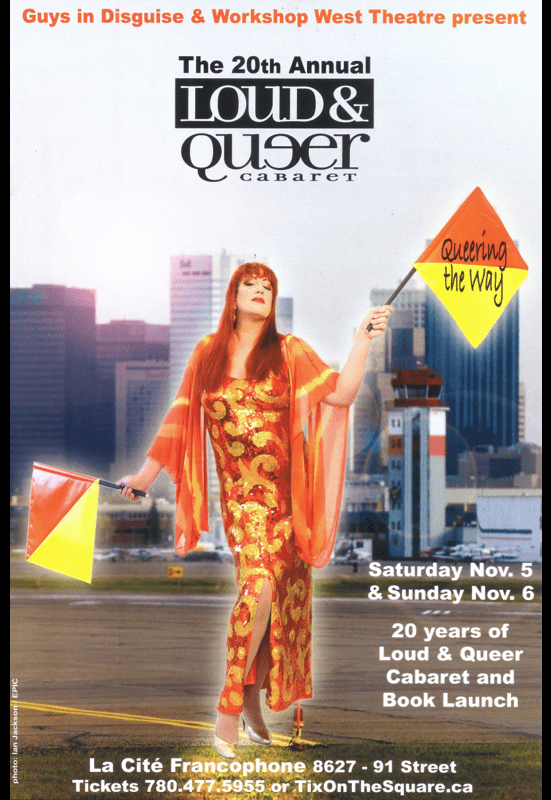
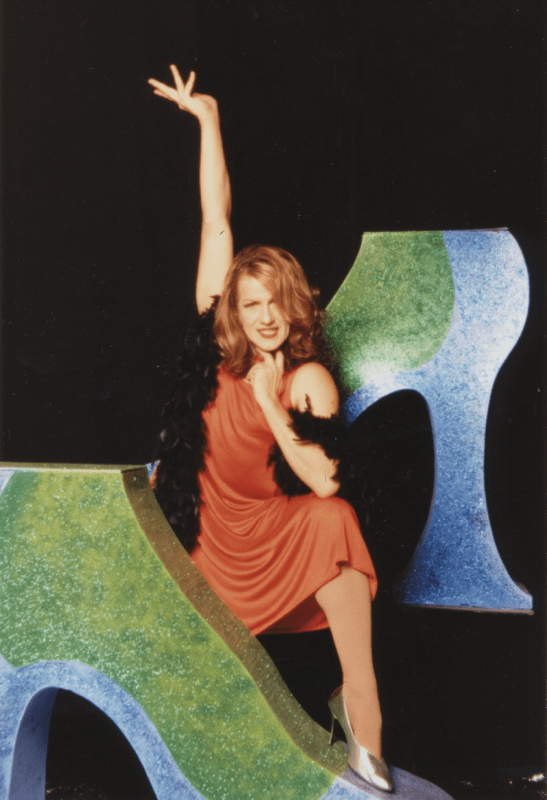
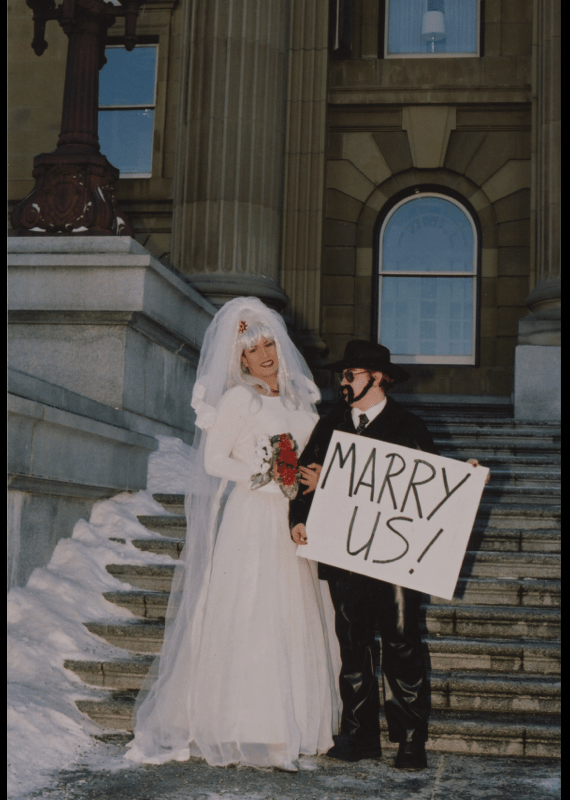
Loud & Queer Publicity Pics
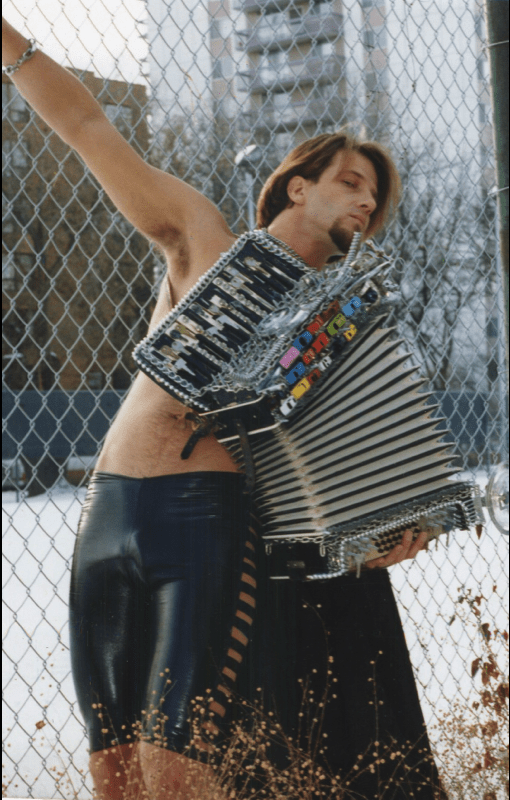
From the Guys in Disguise Collection
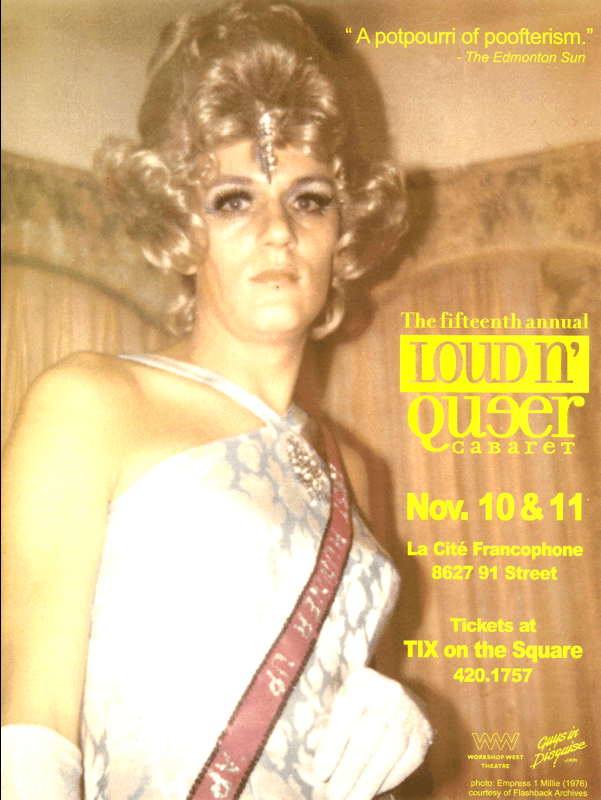

Funding for this story made possible by the Edmonton Heritage Council and the City of Edmonton




Ruth DyckFehderau
Please read our story on Ruth here: https://yegqueerhistory.ca/stories-that-heal-ruth-dyckfehderau/
Photocred to M. Kanjilal
- Ruth DyckFehderau

 Cherese Reemaul