


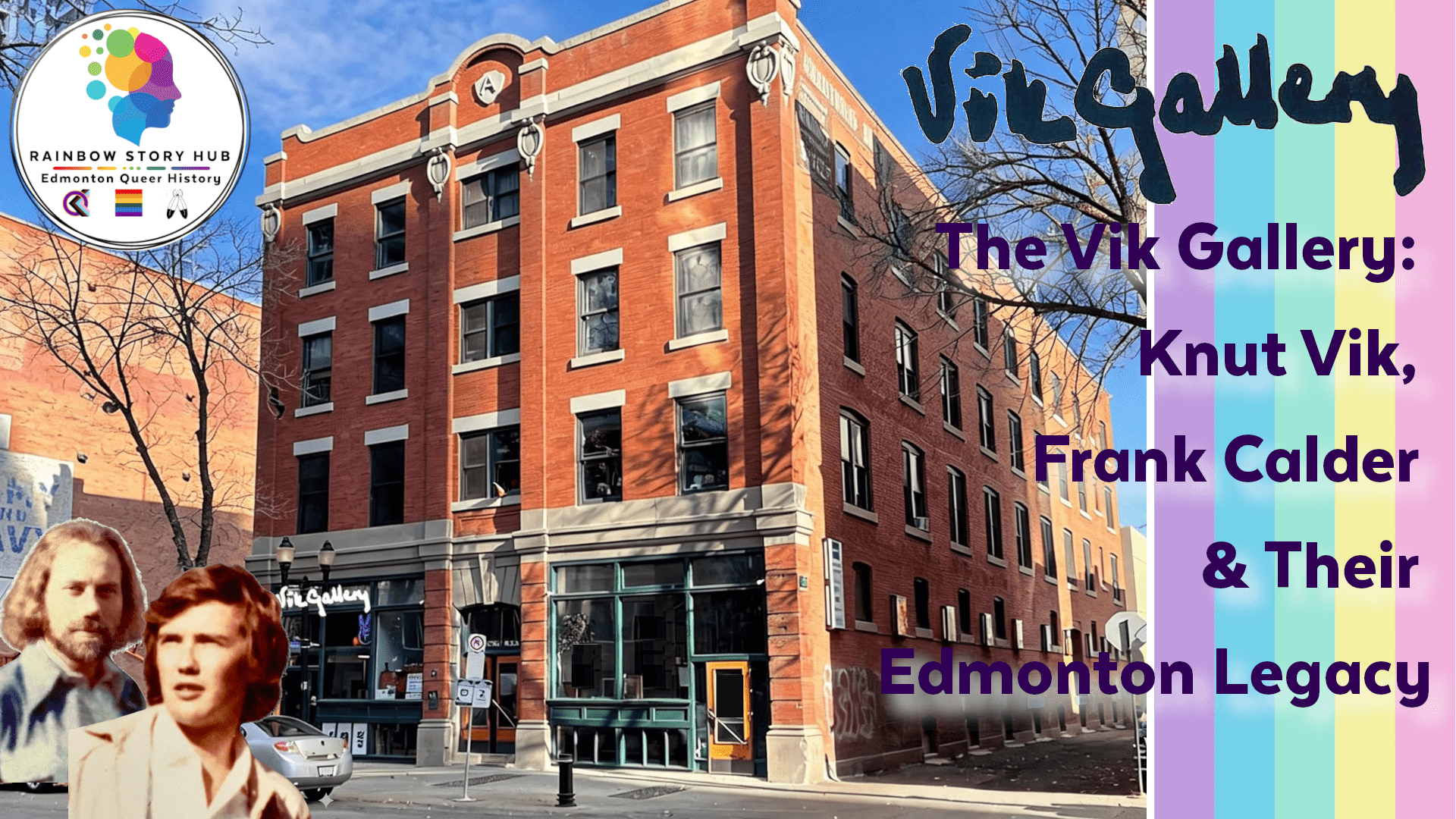
Author’s Note
When Edmonton community builder and activist Michael Phair first suggested I explore the story of Vik Gallery, I expected to uncover the history of a memorable Edmonton art gallery from the 1980s—one I distinctly remembered from my own experiences in the city. What I found was something much deeper.
As I followed the story, it led far beyond the gallery walls—to a remarkable historic home, the vision of Dr. Knut Vik, his enduring and loving partnership with Frank Calder, and connections to Edmonton’s cultural, queer, and HIV/AIDS histories. What began as research into an art gallery became a journey through decades of community building, resilience, and love.
What struck me most was how a single gallery, a single home, and a single partnership could illuminate so many different facets of our community’s past. This is a story about art, but it is equally a story about heritage preservation, chosen family, and the lasting impact that dedicated individuals can have on the city around them.
As a queer historian, I am often reminded that the most compelling stories are found where different histories intersect. Vik Gallery is one of those stories. It is not simply the history of a gallery, but a story of art, heritage, partnership, and legacy that deserves to be remembered.
— Ron Byers
Dr. Knut Vik
In Edmonton’s historical record, some individuals shape the city not through public prominence, but through sustained, quiet influence across multiple domains. Dr. Knut Egil Vik stands among these figures. A physician of exceptional training and discipline, Vik also emerged as a significant arts patron and gallery founder during a formative period in Edmonton’s cultural development.
His life offers a rare intersection of medicine, artistic advocacy, and lived queer experience, making him an important—if under-documented—figure within the broader narrative of Edmonton’s social and cultural evolution.
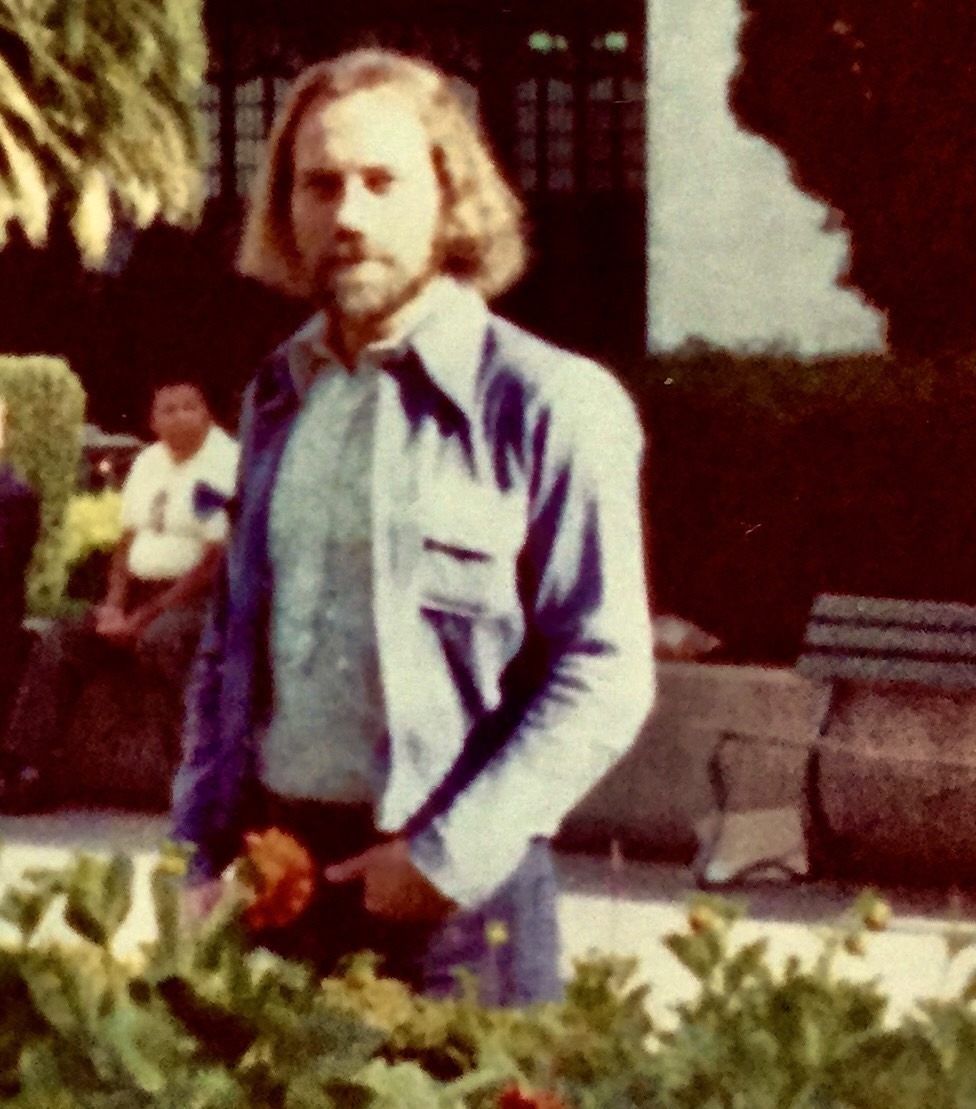
Taken by Frank Calder 1970
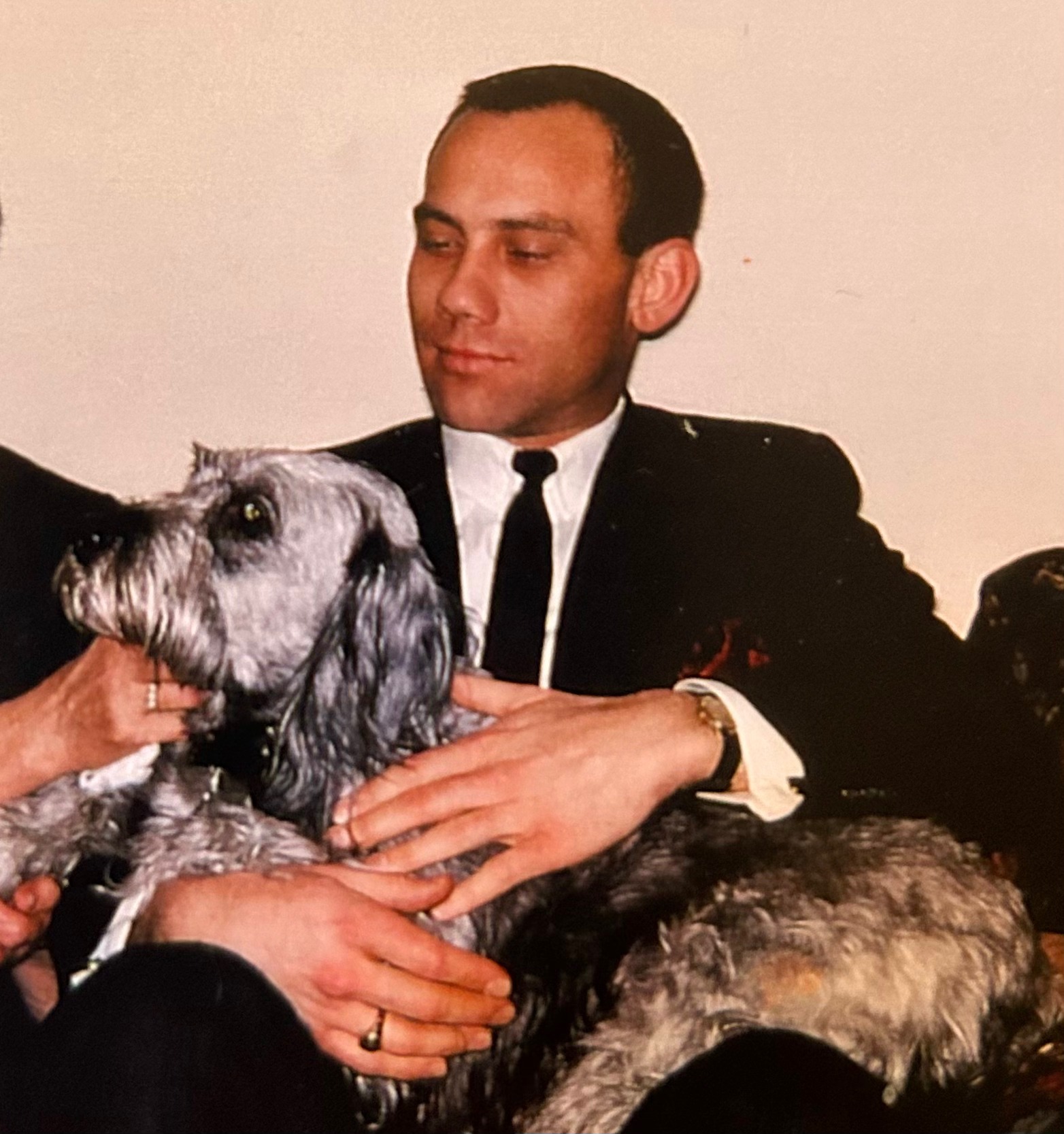
Year unknown
Courtesy F. Calder
Medical Career and Public Service
Dr. Vik graduated top of his class in medicine from the University of Alberta in 1957 and completed medical and surgical residencies in both Edmonton and Philadelphia. Beginning his practice in Edmonton in 1962, he built a career that extended far beyond traditional surgical work.
He practiced surgery and obstetrics at the Edmonton General Hospital while maintaining a family practice. His work expanded into geriatrics, addictions treatment, breast cancer clinics at the Cross Cancer Institute, and early palliative care.
Notably, Vik was among the first physicians in Edmonton to treat patients with HIV/AIDS during the early years of the epidemic. This placed him at the intersection of medicine and stigma at a time when many practitioners hesitated to engage with affected populations.
His leadership roles included twelve years as Chair of Alberta’s Fatality Review Board and later service on Mental Health Review Panels, demonstrating sustained influence in provincial health governance.
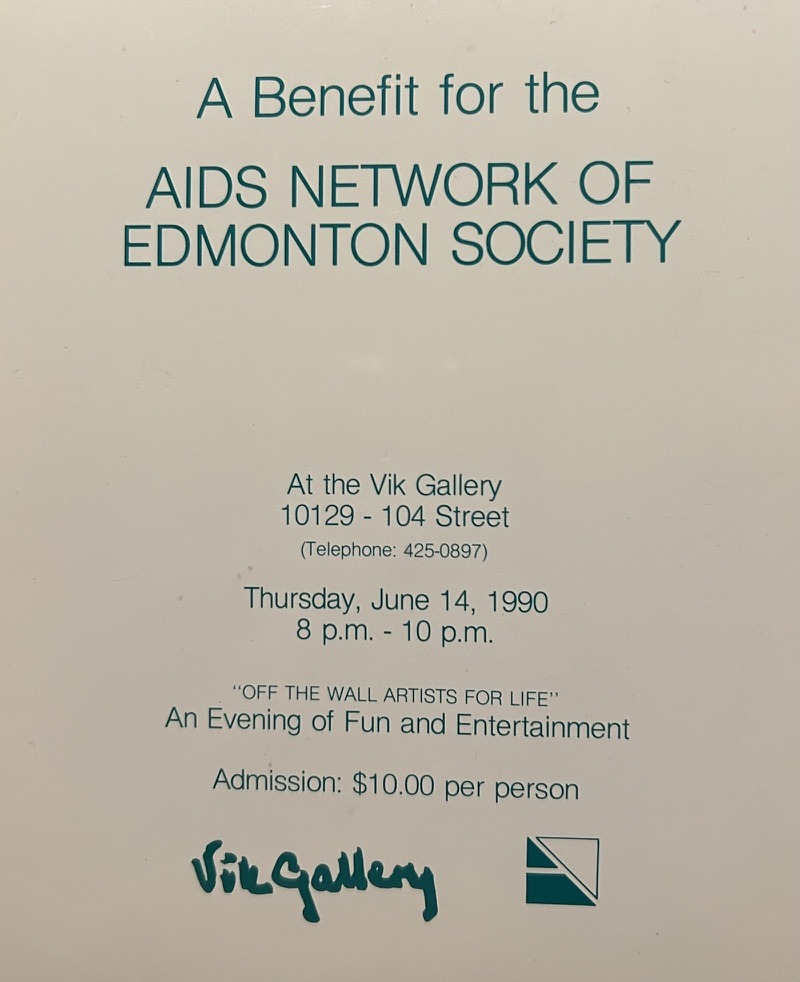
Courtesy F. Calder
Vik Gallery (10129 – 104 Street)
During the 1980s, Vik founded the Vik Gallery in downtown Edmonton at 10129 – 104 Street in the historic Armstrong Block. At the time, this area had not yet become the arts corridor it is today. The opening in October 1983 was covered by the Edmonton Journal, which noted that Vik deliberately chose downtown to help regenerate interest in the core—an early contribution to what would become one of Edmonton’s most vibrant cultural neighbourhoods.
The gallery’s 270-square-metre interior was designed by Edmonton architect Donald Bittorf. At opening, Vik obtained permission from the City to place a 1.8-metre welded steel sculpture by Roy Leadbetter on the sidewalk in front of the gallery—an early example of integrating public art with commercial gallery space in Edmonton.
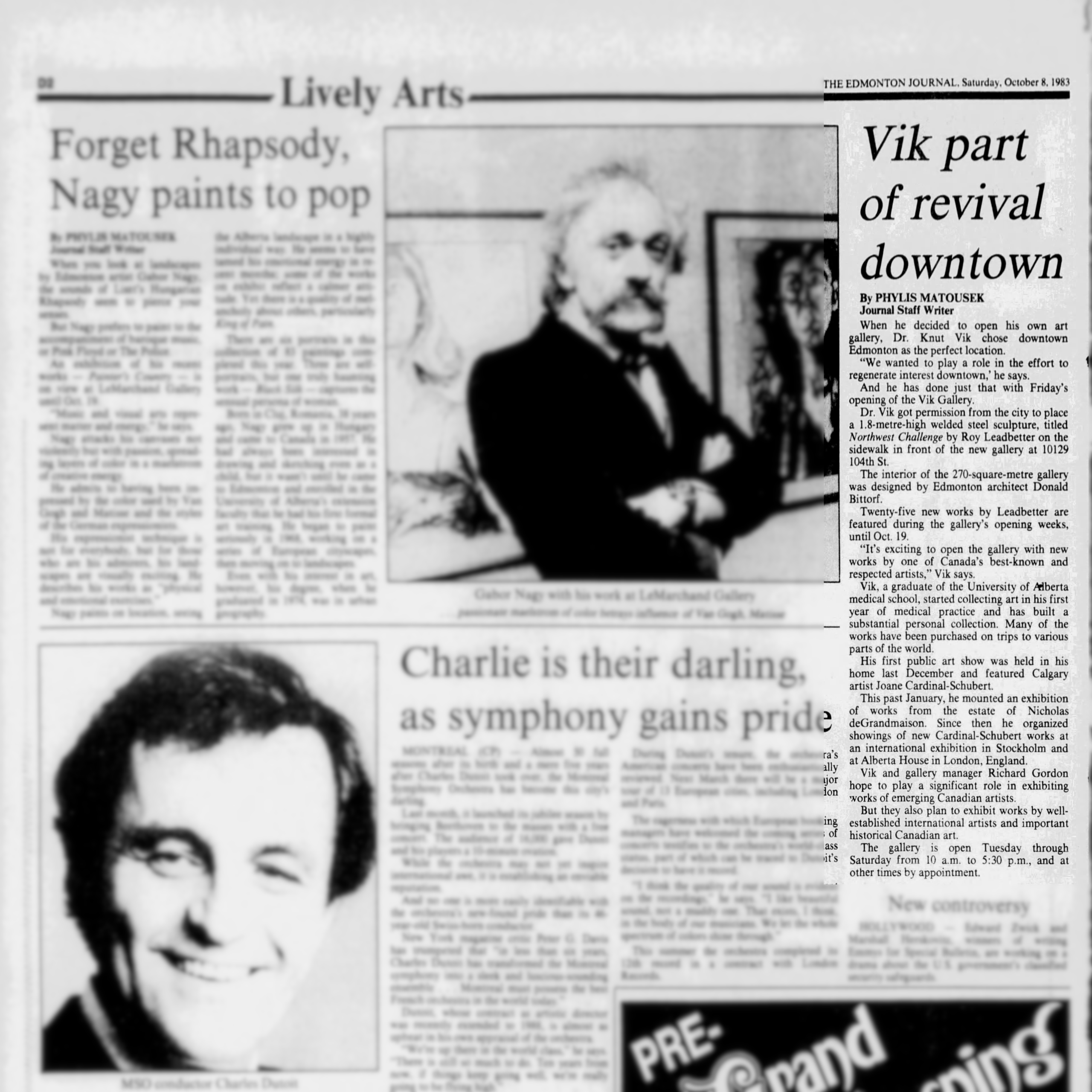
October 8, 1983
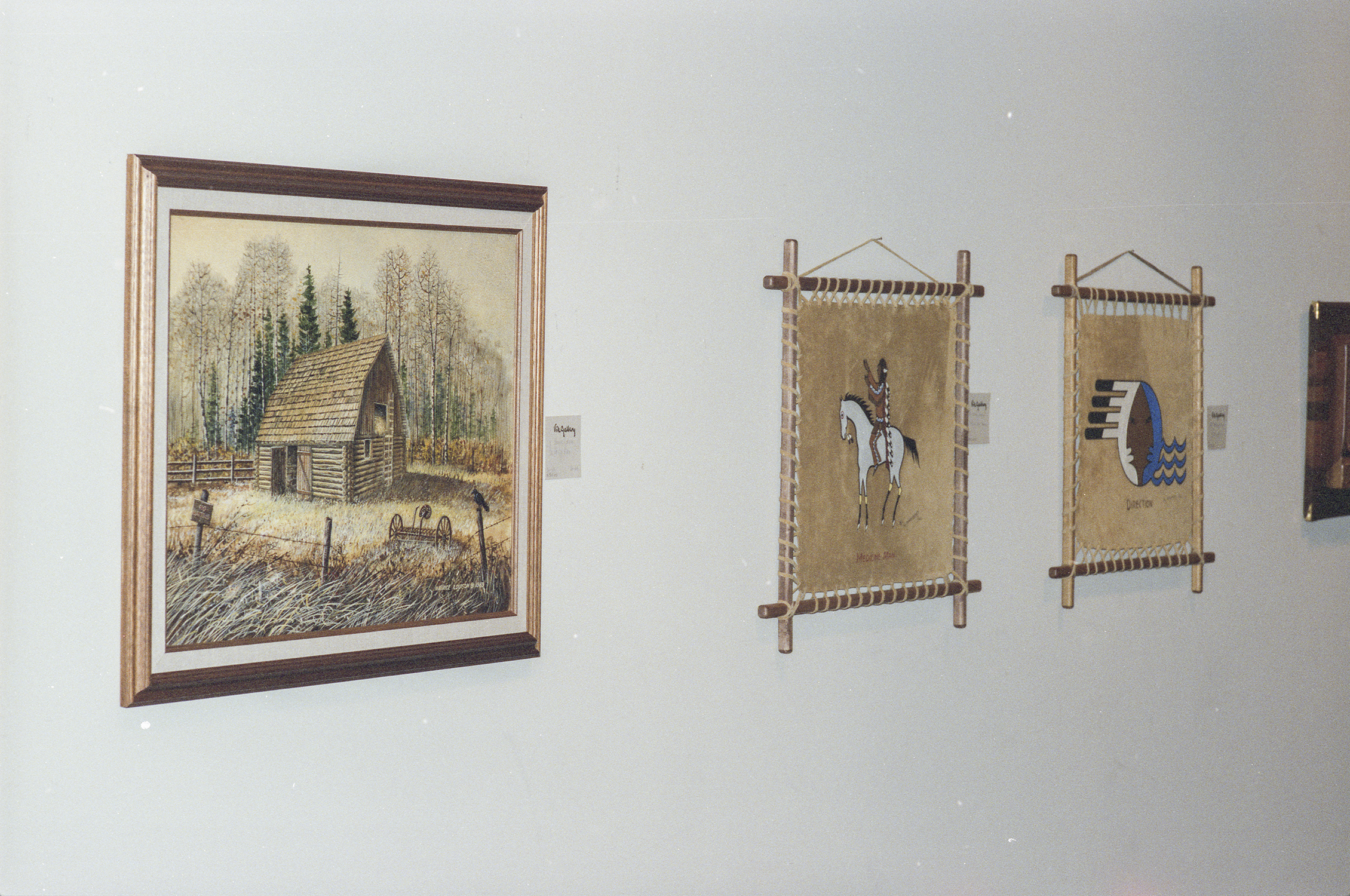
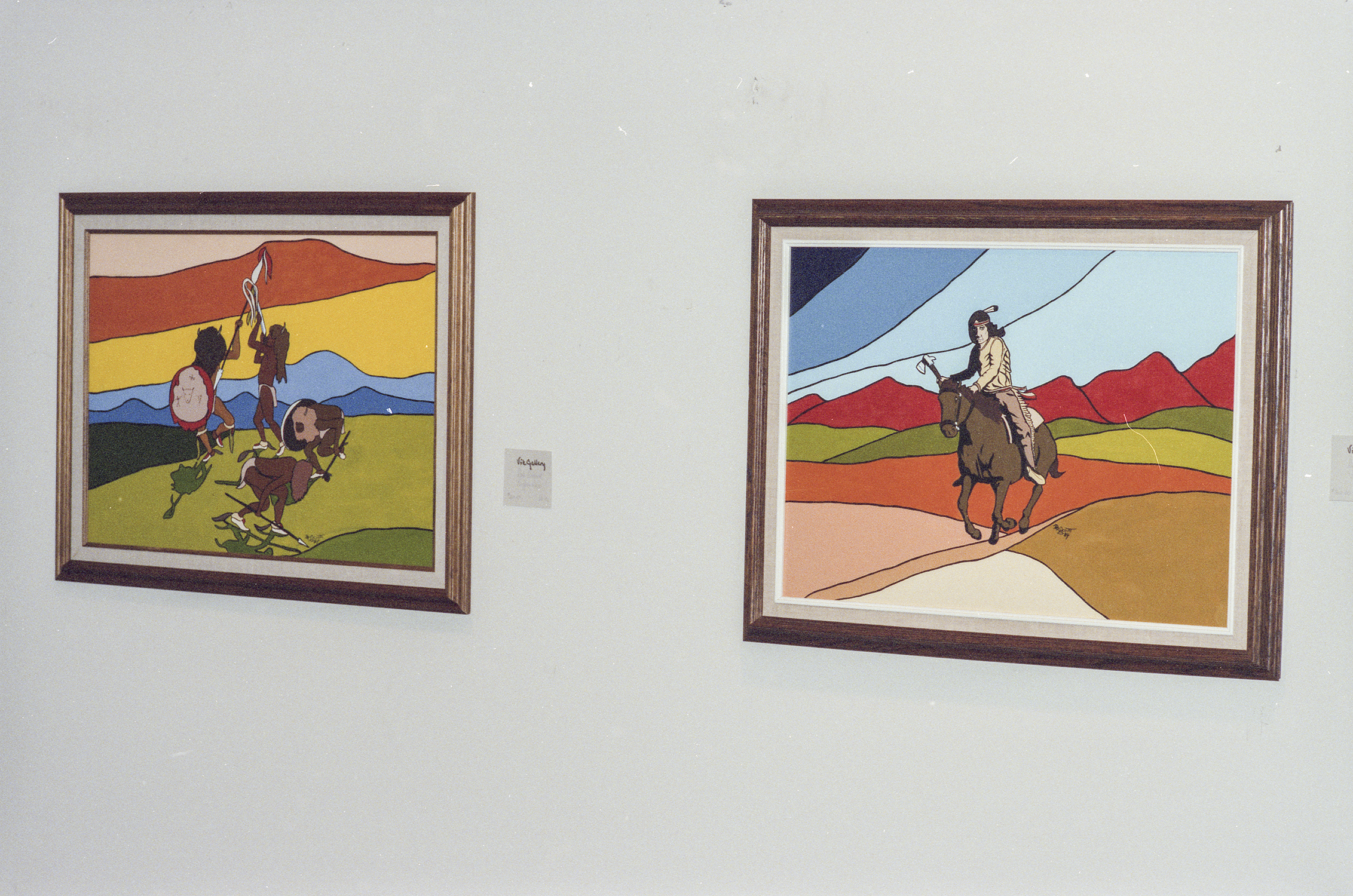
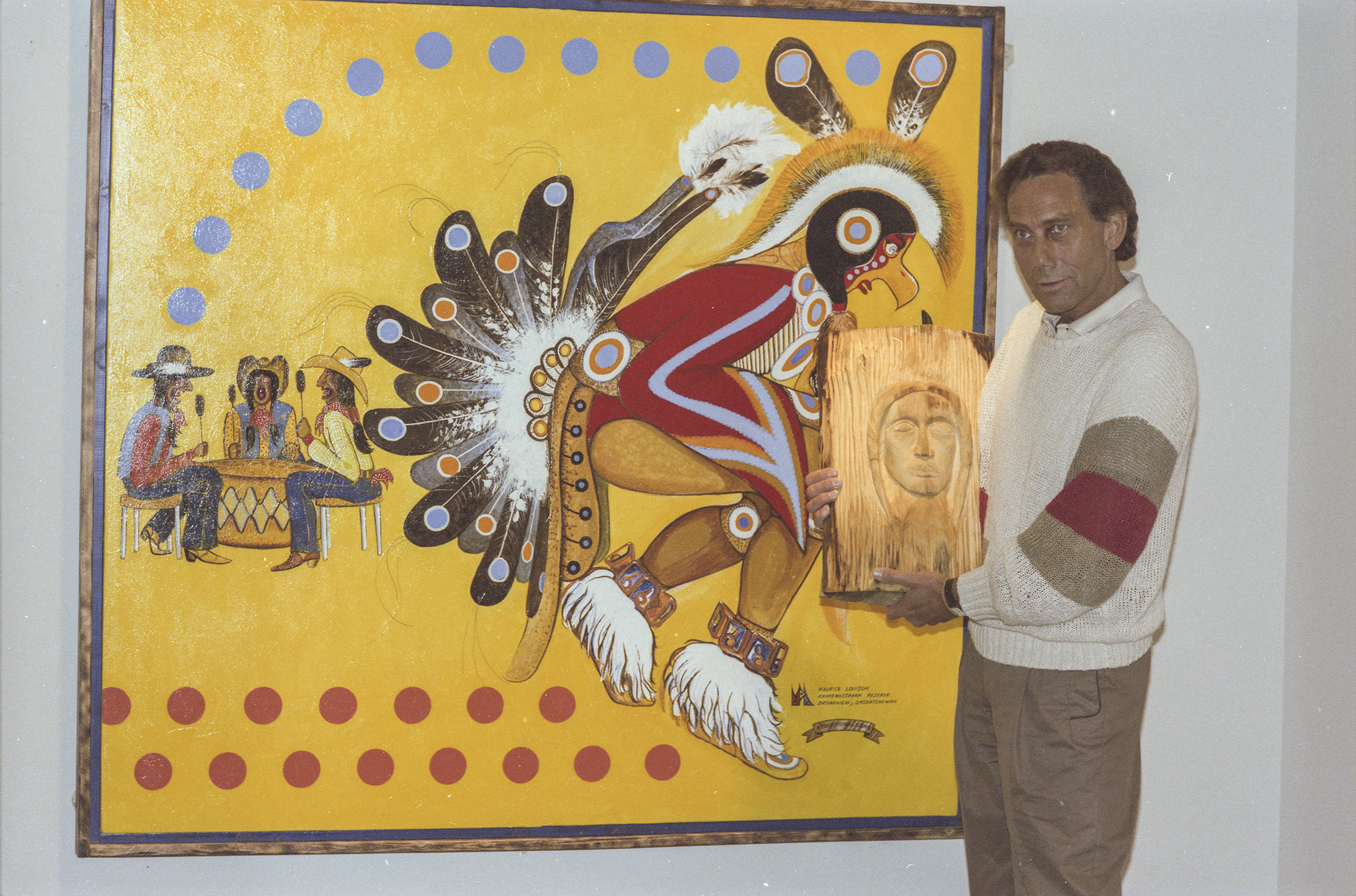
Image appears courtesy of the Provincial Archives of Alberta
These photographs were taken at Vik Gallery in 1984 and are preserved as photographic film negatives by the Provincial Archives of Alberta. The images are reproduced here with permission for this story. Copyright and all other rights remain with the Provincial Archives of Alberta (PAA).
Today the Armstrong Block, where Vik Gallery had been located, is a designated historic resource – first by the City of Edmonton in 2001 and then the Province of Alberta in 2003.
Situated directly across from Michael Phair Park, the Armstrong Block offered an intimate, pedestrian-friendly character that now attracts trendy boutiques, patios, and cafes along 104 Street.
Archival listings confirm an active exhibition program including:
• Joane Cardinal-Schubert (paintings and prints)
• Jane Ash Poitras (contemporary works, 1987)
• Jim Davies (paintings)
• Jonathan Forrest (paintings)
• Li Mo Li and Yung Yun (Chinese contemporary works, 1989)
• Adele Knowler (1991 exhibition)
These exhibitions demonstrate that the Vik Gallery functioned as a serious contemporary exhibition space, supporting artists including Indigenous artists—who would later become central to Canadian art history. Vik Gallery helped showcase emerging and established artists during a period when Edmonton’s contemporary art scene was rapidly expanding, particularly in Indigenous and experimental art practices. A further hallmark of the Vik Gallery was a series of exhibitions of art from Africa, Asia and South America which drew substantial attention to the gallery.
Institutional Cultural Influence
In addition to operating his gallery, Vik served on the boards of the Edmonton Art Gallery (now the Art Gallery of Alberta) from 1981 to 1983, Alberta Ballet, Edmonton Opera, and Theatre Network.
This positioned him as a bridge between independent artistic production and formal cultural institutions, allowing him to support artists across multiple levels of visibility and legitimacy.
Frank Calder: Partner, Strategist, and Co-Author of a Life
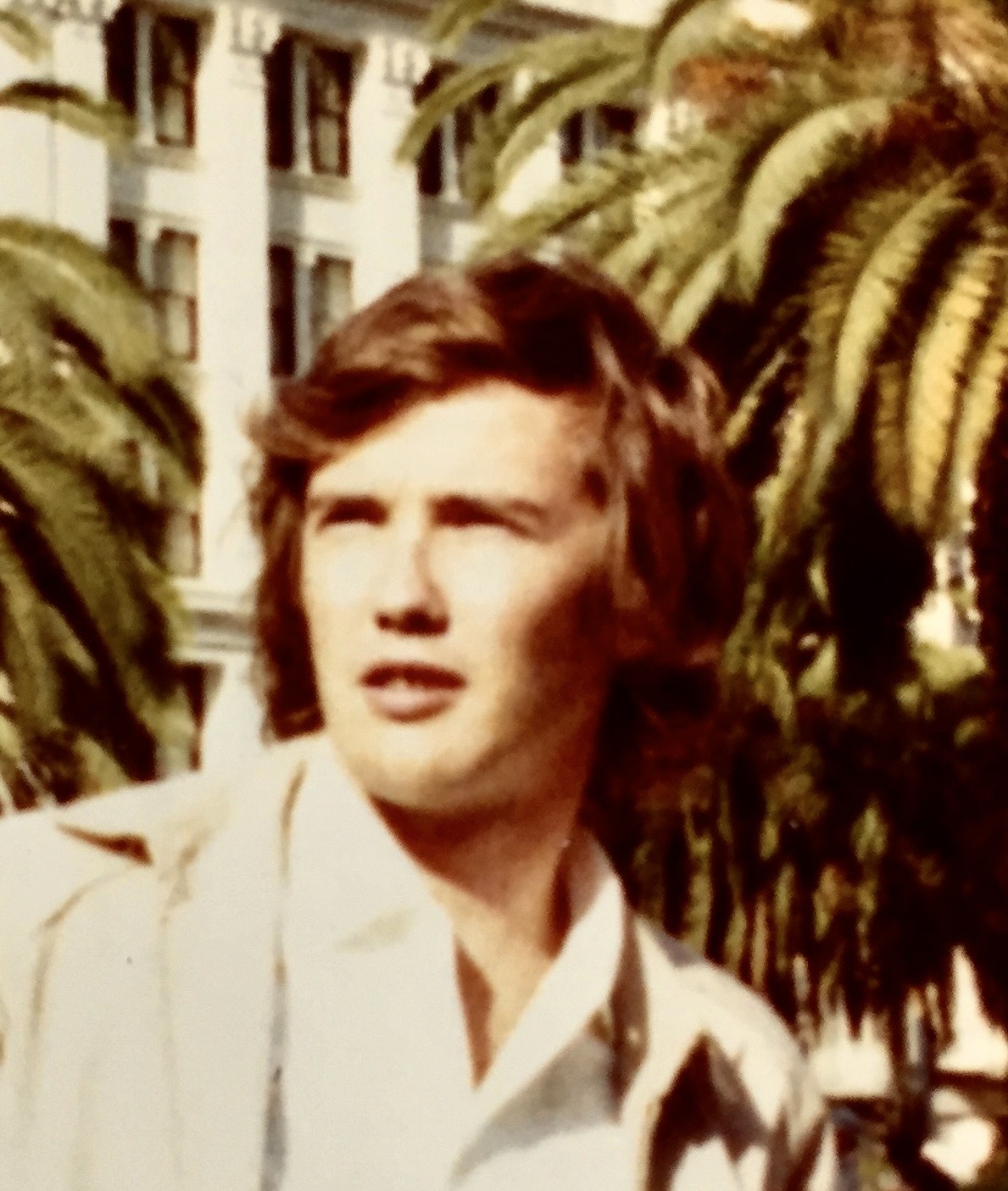
Taken by Knut Vik 1970
Frank Calder was Dr. Vik’s long-term partner and, by any measure, a significant figure in Edmonton’s civic and communications landscape in his own right. Their partnership of 46 years, which lasted until Vik’s death in 2016, was one of quiet complementarity: a physician and arts patron alongside a public affairs strategist and agency founder.
Background and Early Career
Frank Calder’s professional life began in the public sector. He served as head of the Public Affairs Bureau for the Government of Alberta, the provincial government’s central communications arm—a role that placed him at the intersection of policy, messaging, and public engagement. This experience gave him an unusually deep familiarity with Alberta’s institutional landscape, and a reputation for navigating complex, sensitive issues with discretion and effectiveness.
Like Knut Vik, Calder has served on multiple boards including HIV Edmonton, the then iSMSS (Institute for Sexual Minorities Studies and Services now known as The Fyrefly Institute) at the University of Alberta, the then Edmonton SPCA, Edmonton Opera, the Citadel Theatre and the Alberta Wilderness Association.
Calder Bateman Communications and Later Career
In 1990, Frank Calder co-founded Calder Bateman Communications with Margaret Bateman in Edmonton. The agency grew into one of Alberta’s most respected full-service communications firms, specializing in advertising, public relations, marketing, design, and brand management.
Over nearly three decades, Calder Bateman earned national recognition for its work, including Clio Awards in New York for their HIV Tonight! (2016) campaign for HIV Edmonton and recognition at the Advertising Club of Edmonton and the ADCC. The company was involved in many human rights and environmental issues.
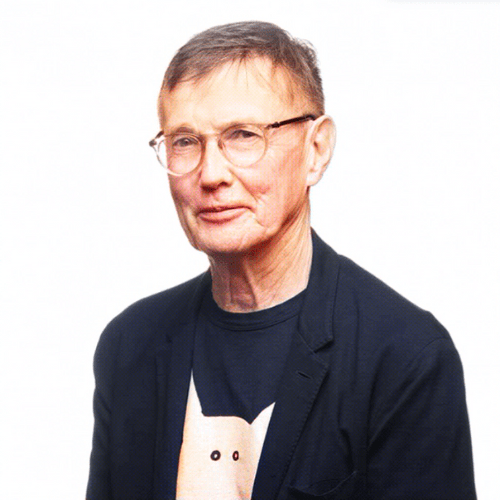

Courtesy Edmonton Journal – Nov. 15, 2014
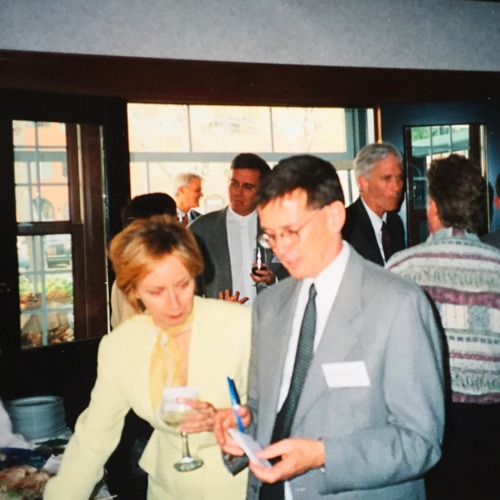
X/@calderbateman
Calder Bateman’s campaigns included STI awareness initiatives for Alberta Health, anti-homophobia work for the University of Alberta, the innovative “Pride Tape” initiative—rainbow-coloured hockey stick tape promoting inclusiveness, used by the Edmonton Oilers and ultimately all NHL teams – as well as involvement in other key issues ranging from support for the Vriend case of the 1990’s to the transgender issues of today, as well as ‘gay marriage’ and queer-straight alliances.
That an Edmonton agency co-founded by the partner of one of the city’s first HIV/AIDS physicians would produce pro-2SLGBTQ+ campaigns decades later is a detail that quietly connects two eras of queer Edmonton history.
In 2018, Calder Bateman merged with Calgary-based ZGM Modern Marketing Partners, forming one of Alberta’s largest independent marketing agencies with approximately 80 staff across Edmonton and Calgary. In announcing the merger, Frank Calder cited ZGM’s strong client record, campaign quality, and positive workplace culture as deciding factors.
Following the merger, Calder has continued as a senior consultant at ZGM, where he brought over fifty years of experience in strategic communications to clients navigating public affairs, media, and stakeholder engagement challenges. His career arc—from provincial government communicator to agency co-founder to senior strategist—reflects a sustained commitment to the craft of public communications in Alberta.
A Partnership Acknowledged Quietly
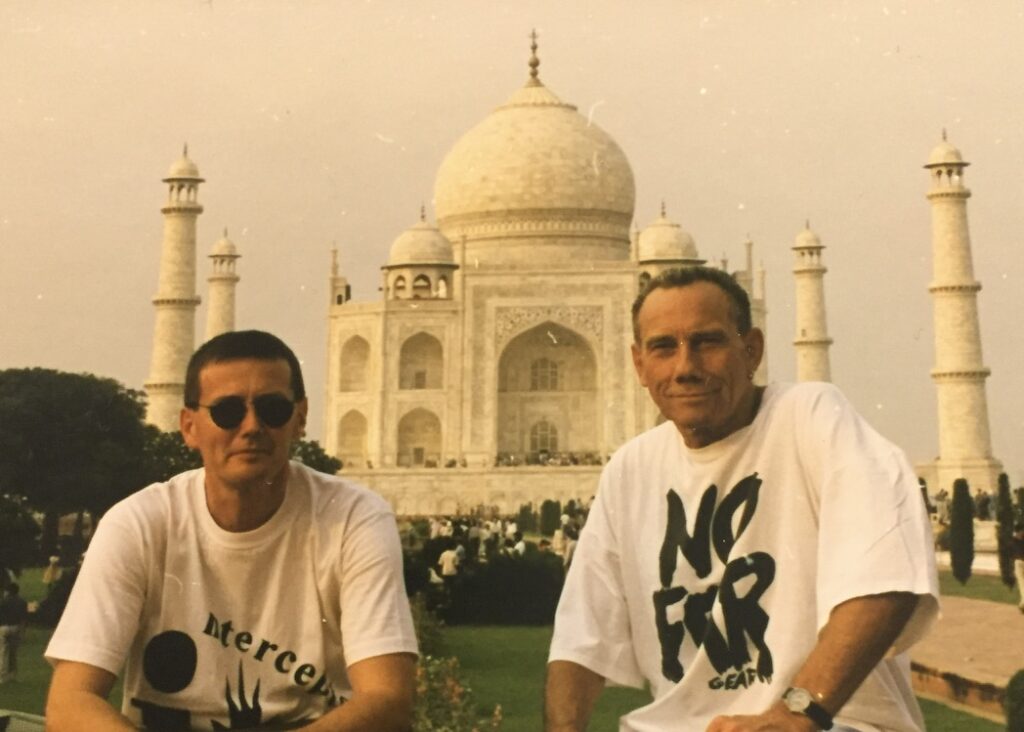
Courtesy F. Calder
The relationship between Vik and Calder was not ceremonially recognised in the manner that might be expected today, although it was never hidden and was consistently present in the documentary record. Property records show Frank Calder and Dr. Knut Vik acquired the Wallbridge Residence jointly in August 1989. Vik’s 2016 obituary named Calder as his “partner and best friend.” Also, tellingly, the 2009 obituary for Frank’s mother, Mary Calder, lists her son as “Frank (Knut) Calder, of Edmonton”—a small but significant public acknowledgment of their bond.
The Wallbridge Residence: Heritage Stewardship – Groat Estates
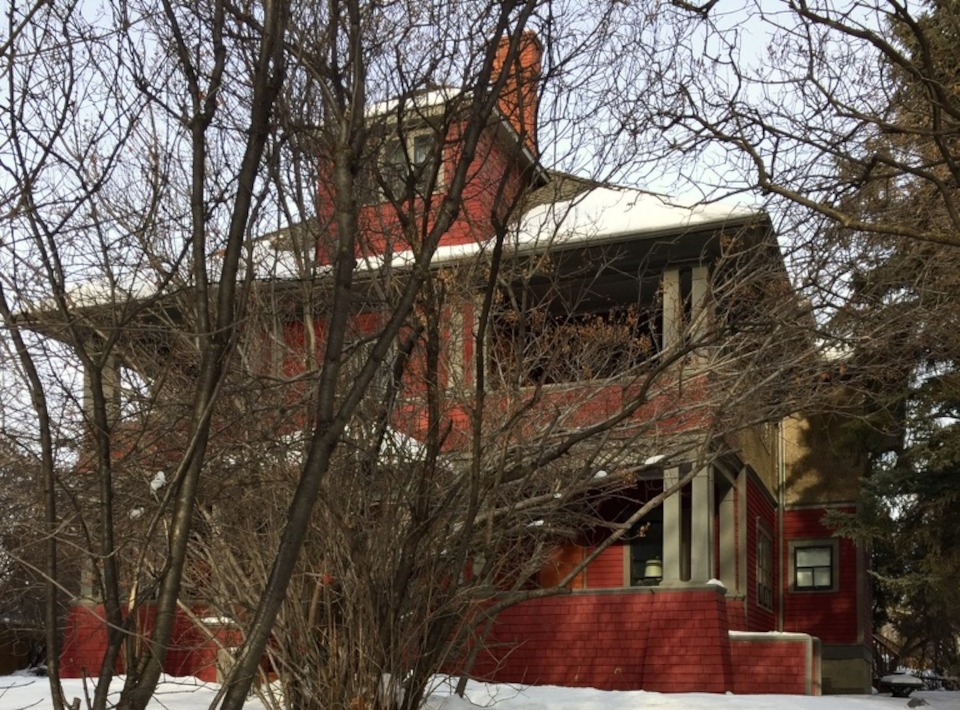
Among the most tangible legacies of the Vik–Calder partnership is their restoration of one of Edmonton’s most architecturally significant heritage homes: the Wallbridge Residence in the Groat Estates area of the Westmount neighbourhood.
Courtesy F. Calder
History of the House
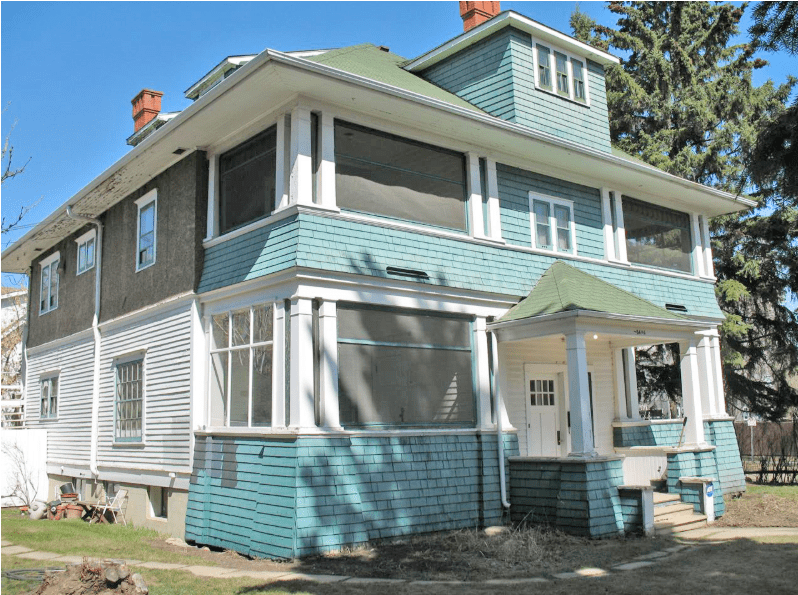
Built around 1910 during Edmonton’s first economic boom, the two-and-a-half-storey dwelling was originally constructed for the Merchant’s Bank of Canada. It was purchased in 1919 by James Emberly Wallbridge (1875–1942), a prominent Edmonton lawyer admitted to the Alberta bar in 1907 and appointed King’s Counsel in 1913. The Wallbridge family occupied the home for the next fifty years.
Alberta Residence of Historic Places
Following James Wallbridge’s death in 1942, his daughter Jean Louise Wallbridge—the third female architect registered in Alberta—converted the family home into a multi-family dwelling called the Kildonan Apartments, to provide income for her widowed mother and to address wartime housing needs. Jean’s conversion was architecturally thoughtful: she did not alter the building’s Edwardian character, but added dormers, relocated the main entrance, and constructed interior staircases to accommodate four apartments.
Jean Wallbridge’s partnership with Mary Imrie in both architecture and life is itself a significant story in Edmonton’s queer history. Together, Wallbridge and Imrie established Edmonton’s first female architectural partnership in 1950, designing over 200 buildings across their careers. Their modernist home and studio, “Six Acres,” was both a professional and domestic collaboration.
The house passed through several owners after Jean’s death in 1979, and was acquired by Frank Calder and Dr. Knut Vik on August 9, 1989.
Vik and Calder’s Stewardship
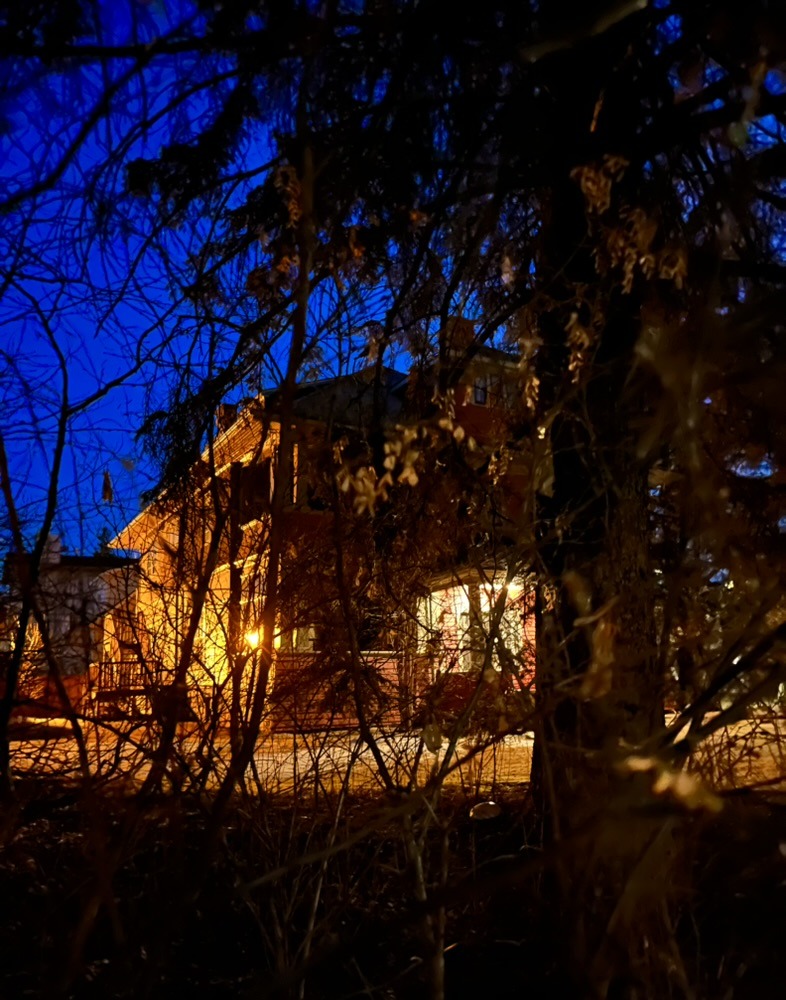
From the time of their purchase, Vik and Calder committed to restoring the Wallbridge Residence to its original single-family character. In a 2009 Edmonton Journal interview, Vik described their philosophy plainly: “We made a pact that we would never, ever let a developer get his hands on this lot. We loved the house so much that we decided that whatever it takes we would save it.”
That commitment became formal in 2008, when Vik initiated the process to have the home designated as a Municipal Historic Resource—a legal protection from demolition or major alteration. The designation was granted under Bylaw 15011 in November 2008, and an extensive exterior restoration followed, completed in 2009 at a cost of approximately $549,000, including $150,000 from Edmonton’s heritage reserve fund.
The restoration, led by architect David Murray, included replacing asphalt shingles with top-quality cedar shingles, siding repairs, reconstruction of the front entry porch, and repainting and refinishing the hardwood floors throughout. The result preserved the building’s Edwardian four-square character—the stone-dash stucco, cedar siding, paired square columns, and broad verandahs—while returning it to a livable single-family home.
Courtesy F. Calder
Architectural and Historical Significance
The Wallbridge Residence is valued as one of the oldest surviving residential buildings in Groat Estates, a community established in 1905 by James Carruthers, who placed a covenant on sales ensuring no home could be built with a value less than $5,000. The residence stands out for its grand proportions—over 500 square metres of floor space, four fireplaces, and five bedrooms across three storeys—and for its fine Edwardian detailing.
Its designation recognises not only architectural merit but historical association: with the Wallbridge family, with Jean Wallbridge’s pioneering architectural work, and by extension, with Vik and Calder’s decades of care. The home at 12606 – 104 Avenue NW now carries multiple layers of queer history within its walls—from Jean Wallbridge and Mary Imrie’s partnership in the mid-twentieth century to Frank Calder and Knut Vik’s stewardship in the decades that followed.
Historical Significance
Dr. Knut Vik represents a class of historical actor whose contributions are structural rather than visible. Through medicine, he addressed critical health needs, including stigmatized populations. Through his gallery and institutional roles, he supported emerging artists and contributed to Edmonton’s cultural infrastructure. Through his partnership with Frank Calder—and their shared stewardship of the Wallbridge Residence—he participated in the ongoing project of preserving Edmonton’s built and social heritage. Calder would also say that:
“Knut was a compelling individual and his passions could be remarkably contagious. A key part of his legacy has thus been the generational inspiration he provided for his multiple causes.“
Frank Calder’s parallel career in public communications, his founding of one of Edmonton’s leading agencies, and his quiet presence as Vik’s partner across more than four decades adds further dimension to this story. Together, they represent something Edmonton’s historical record rarely captures clearly: a same-sex couple whose influence on the city was real, sustained, and lasting, even when it was often low key.
Such individuals are often underrepresented in historical narratives, yet their influence is foundational. Vik’s life, and Calder’s alongside it, demonstrates how professional authority, cultural engagement, and personal identity can intersect to shape a city’s development in lasting ways.
Additional Resources:
Racy HIV Edmonton campaign wins Grand Clio award
Global News Edmonton
https://globalnews.ca/news/3112838/racy-hiv-edmonton-campaign-wins-grand-clio-award/
Edmonton Historical Board
Armstrong Block
https://www.edmontonhistoricalboard.com/structures/armstrong-block/
David Murray Architect
Wallbridge Residence
Designation And Restoration Of This 1911 Edmonton Home
https://www.davidmurrayarchitect.ca/wallbridge-residence/
Alberta Register of Historic Places
Wallbridge Residence
https://hermis.alberta.ca/ARHP/Details.aspx?DeptID=1&ObjectID=4664-0225
City of Edmonton
Wallbridge Residence Statement of Significance
https://www.edmonton.ca/sites/default/files/public-files/historic-resource-wallbridge-residence.pdf


Ron Byers
Ron Byers is a community leader and storyteller. Decades of work in Edmonton’s non-profit sector have given him an extensive resume of service as well as a unique viewpoint on our city and its history.
He has left his mark with many groups such as the Alberta’s oldest 2SLGBTQ+ organization the Imperial Sovereign Court of the Wild Rose where he was a Founding Member, the Pride Centre of Edmonton as part of developing its Aging With Pride Program and the Edmonton Pride Seniors Group. He also worked with the Edmonton Heritage Council and its Edmonton City As Museum Project (ECAMP) to bring stories of our Queer history to the public space. Ron also helped develop and monitor the Harm Reduction Program, PeerNPeer managed by the Queer & Trans Health Collective – QTHC (formerly Edmonton Men’s Health Collective).
He is also a positive speaker for HIV Edmonton, founder of Pride Edmonton and Rainbow Story Hub and the Cultural Events Lead for the 2030 Gay Games Bid Committee.
- Ron Byers

- Ron Byers

- Ron Byers

- Ron Byers

 Ruth DyckFehderau
 Cherese Reemaul